
Introduction
In the textile and apparel industry, reducing waste is not only an operational goal. It is also a strategic necessity. Every inch of fabric that goes unused represents an added cost, lower profitability, and, in many cases, a negative impact on the sustainability of the production process. That is why more and more companies are looking for ways to optimize material usage without sacrificing quality, speed, or precision. One of the most effective ways to achieve this is through CAD/CAM automation.
CAD/CAM automation makes it possible to connect design, pattern making, marker planning, digitizing, and cutting into a smarter workflow. Instead of relying on disconnected or manual processes, companies can improve material utilization, reduce errors, speed up production times, and make more accurate decisions from the earliest stages of the process. Velocity Plotters & Cutters offers solutions specifically aimed at that goal: improving efficiency, precision, and productivity in industries such as fashion and apparel, automotive, furniture and upholstery, footwear and leather, and specialized industries.
Why Does Textile Waste Happen?
Before discussing solutions, it is important to understand that textile waste does not originate only during the cutting stage. It can begin at different points throughout the workflow, for example:
- poorly developed or inaccurate patterns;
- inefficient markers;
- misinterpretation between design and production;
- poor file conversion;
- rework caused by technical errors;
- weak integration between software and machinery;
- inaccurate cutting;
- inefficient use of fabric width.
When these problems accumulate, companies end up consuming more fabric, more time, and more resources than necessary. The good news is that many of these issues can be corrected with a well-implemented CAD/CAM ecosystem.
What Is CAD/CAM Automation and Why Does It Help Reduce Waste?
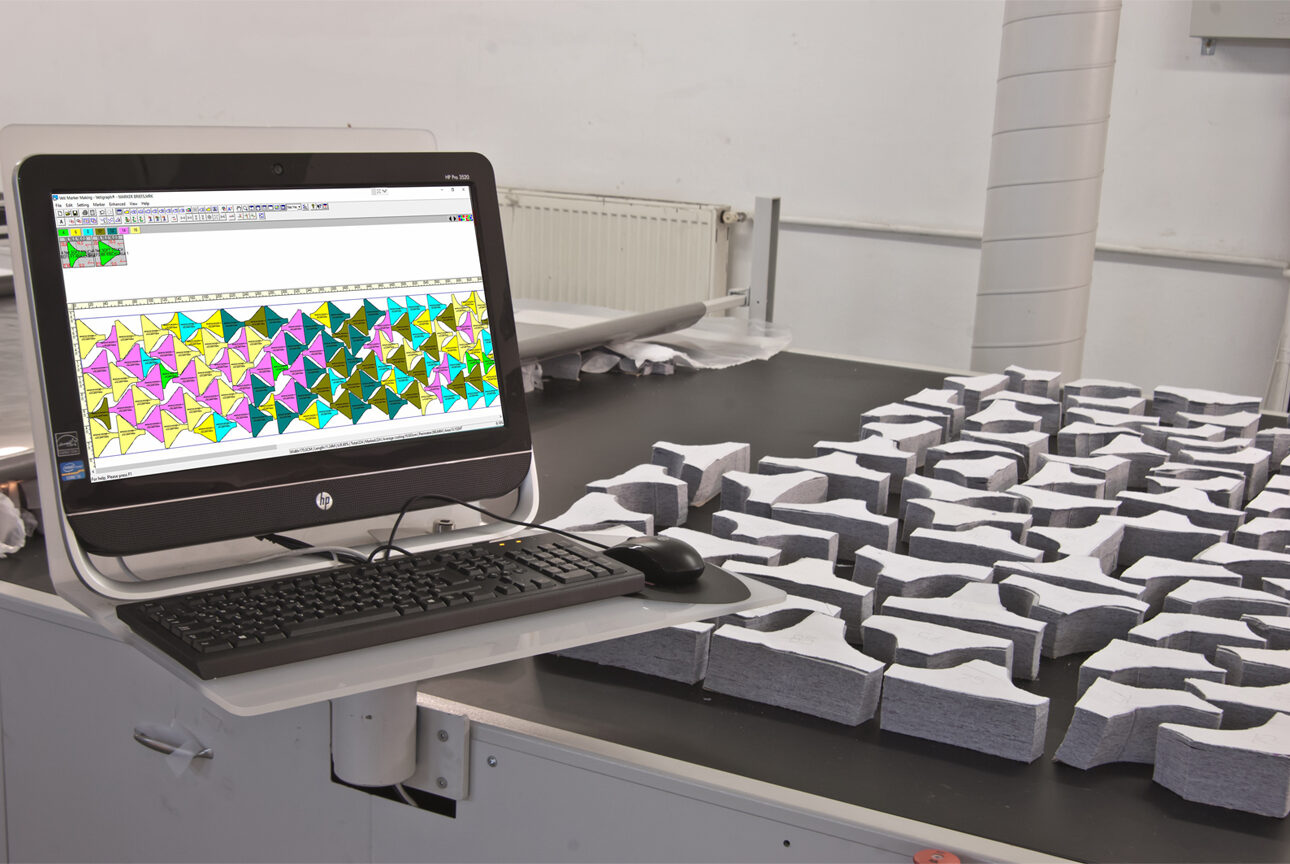
CAD/CAM automation integrates digital tools to design, prepare, optimize, and execute production processes with greater precision. In apparel and textiles, this means work can move more efficiently from the digital pattern stage to marker planning and final cutting.
The real value of the CAD/CAM approach is that it allows companies to:
- work with precise and standardized information;
- reduce manual errors;
- optimize material usage;
- speed up production preparation;
- improve process repeatability;
- connect design, pattern making, and cutting under one operational logic.
In other words, automation does not just save time. It also helps ensure that each stage of the process contributes to better material efficiency.
1. Improve Pattern Development to Prevent Errors from the Start
A large part of textile waste begins during the pattern development stage. When a pattern contains errors, poor adjustments, or inconsistencies, those problems carry over into marker planning, cutting, and sewing.
That is why an effective waste-reduction strategy begins with stronger technical development from the start. Velocity offers solutions that help strengthen this stage, such as VetiGraph CAD, a CAD software suite designed to improve productivity, reduce material waste, and ensure high technical accuracy from digital pattern creation to optimized marker development. With this type of system, it is possible to design and draw patterns, adjust and optimize markers, and perform grading between sizes or measurements while preserving proportions and settings.
By working with more precise digital patterns, companies can reduce rework, minimize late-stage corrections, and create a much stronger foundation for the rest of the production workflow.
2. Optimize Markers to Make Better Use of Material
One of the most critical points in reducing textile waste is marker planning. A well-optimized marker can make a significant difference in fabric yield, while a poor marker can increase material consumption without the company immediately noticing it.
CAD/CAM solutions make it possible to create markers with greater logic, accuracy, and efficiency. This is especially valuable for companies that handle high volumes, multiple sizes, or a wide range of styles.
In this context, Velocity offers equipment such as the Velocity Vector One, Vector Two, and Vector Four Marker Plotters, designed to meet the demands of modern garment, textile, and pattern production. These solutions help print markers with speed, consistency, and adaptability depending on production volume.
When the marker is properly prepared and supported by strong digital tools, companies can make better use of the usable fabric width and reduce unnecessary losses.
3. Digitize Physical Patterns to Prevent Errors and Rework
Many companies still work with physical patterns or partially manual processes. This can lead to inconsistencies, loss of information, and errors when converting physical pieces into production-ready files.
To reduce this risk, Velocity offers V-Shoot, a camera-based digitizing system designed to convert physical patterns into accurate digital files compatible with the leading CAD software platforms on the market. This solution allows businesses to bring physical pieces into a digital environment with greater speed, consistency, and ease of use.
Proper pattern digitizing helps:
- reduce variation between versions;
- improve traceability;
- speed up development;
- prevent manual interpretation errors;
- better prepare data for marker planning and cutting.
4. Improve Integration Between CAD Files and Production Equipment
Another common source of waste is file conversion. When a design is not translated correctly between software and output equipment, scale errors, misalignment, information loss, or delays can appear, leading to rework and unnecessary material consumption.
To address this need, Velocity offers Easy-Plot, a CAD file conversion solution designed to transform files such as .DXF or .DWG into print-ready formats like .PLT or .HPGL, which are compatible with most plotters on the market.
This type of integration helps create a cleaner workflow from design to plotting, reducing operational failures that may result in waste.
5. Use More Precise Plotters for More Efficient Production Preparation
The plotting stage also affects material efficiency, especially when patterns or markers must be printed accurately to support the quality of the next stage in the process.
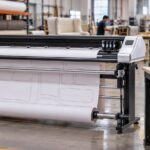
Velocity Plotters & Cutters offers a line of advanced plotting solutions designed to integrate with existing CAD workflows and respond to different modern manufacturing needs. These include:
- Velocity Tecnica One, designed for pre-production departments in fashion, textiles, and apparel;
- Velocity Vector One, Two, and Four, for industrial marker plotting at different levels of demand;
- the Velocity Pattern Printing and Cutting Plotter, which combines inkjet printing with precision cutting and perforation in a single machine.
These solutions help improve consistency in pre-cutting work and support a more organized, precise, and productive workflow.
6. Use Automated Cutting to Minimize Errors and Maximize Yield
Once design, pattern making, and marker planning are properly resolved, the next major opportunity to reduce waste lies in cutting. When this stage is performed with automated systems, companies can significantly improve accuracy, reduce human error, and make better use of materials.
Velocity offers cutting solutions tailored to different operational needs:
Velocity ProCut-X Single Ply Cutter
The Velocity ProCut-X Single Ply is an advanced digital cutting system designed to cut single-layer materials with superior precision, high speed, and reliability. According to the company overview, it is suitable for custom apparel, footwear, automotive interiors, PPE, and technical textiles. Its approach helps optimize cutting, minimize waste, and maximize productivity.
Automatic Multi-Ply Cutter
The Automatic Multi-Ply Cutter is a high-capacity multi-ply cutter designed for large-scale manufacturing. Thanks to its intelligent automation and Industry 4.0 technologies, it delivers precision, speed, and consistency across a wide range of materials, from lightweight fabrics to high-density textiles.
These technologies make it possible for the optimization achieved in CAD and marker planning to be reflected in the final cutting results.
7. Less Waste, More Productivity, and Stronger Competitiveness
Reducing textile waste is not only about saving material. It also results in:
- higher profitability;
- better cost control;
- less rework;
- more reliable delivery times;
- stronger operational consistency;
- more sustainable processes;
- better scalability.
When a company adopts CAD/CAM automation, it stops seeing each stage as an isolated task and begins operating with a connected logic. This creates an overall improvement in performance and strengthens business competitiveness.
Which Velocity Solutions Can Help Reduce Textile Waste?
Velocity Plotters & Cutters offers an ecosystem of solutions that can directly contribute to reducing textile waste, depending on the type of operation and the stage of the workflow a company wants to improve. The main solutions related to this objective include:
- Vetigraph CAD, for design, pattern making, and CAD optimization;
- V-Shoot, for digitizing physical patterns;
- Easy-Plot, for efficient CAD file conversion;
- Velocity Tecnica One, for pattern printing in pre-production;
- Velocity Vector One, Two, and Four, for industrial marker plotting;
- Velocity ProCut-X Single Ply, for precise digital cutting on a single layer;
- Automatic Multi-Ply Cutter, for high-capacity automated cutting.
This makes it possible to build a smarter workflow from the initial concept to final production.
Conclusion
Reducing textile waste with CAD/CAM automation is an increasingly important strategy for companies that want to improve profitability, optimize material usage, and strengthen competitiveness. The key is to understand that waste is not corrected in a single stage, but throughout the entire workflow: design, pattern making, digitizing, file conversion, marker planning, plotting, and cutting.
Velocity Plotters & Cutters offers solutions that support that journey, helping companies move toward a more connected, precise, and efficient operation. From CAD software and digitizing to plotters and automated cutting systems, its portfolio responds to a wide range of needs in apparel, textiles, footwear, automotive, and specialized industries.
For businesses looking to reduce costs, improve material efficiency, and take a strong step toward production modernization, CAD/CAM automation can become a decisive competitive advantage.

 EN_US
EN_US  ES
ES