
Introduction
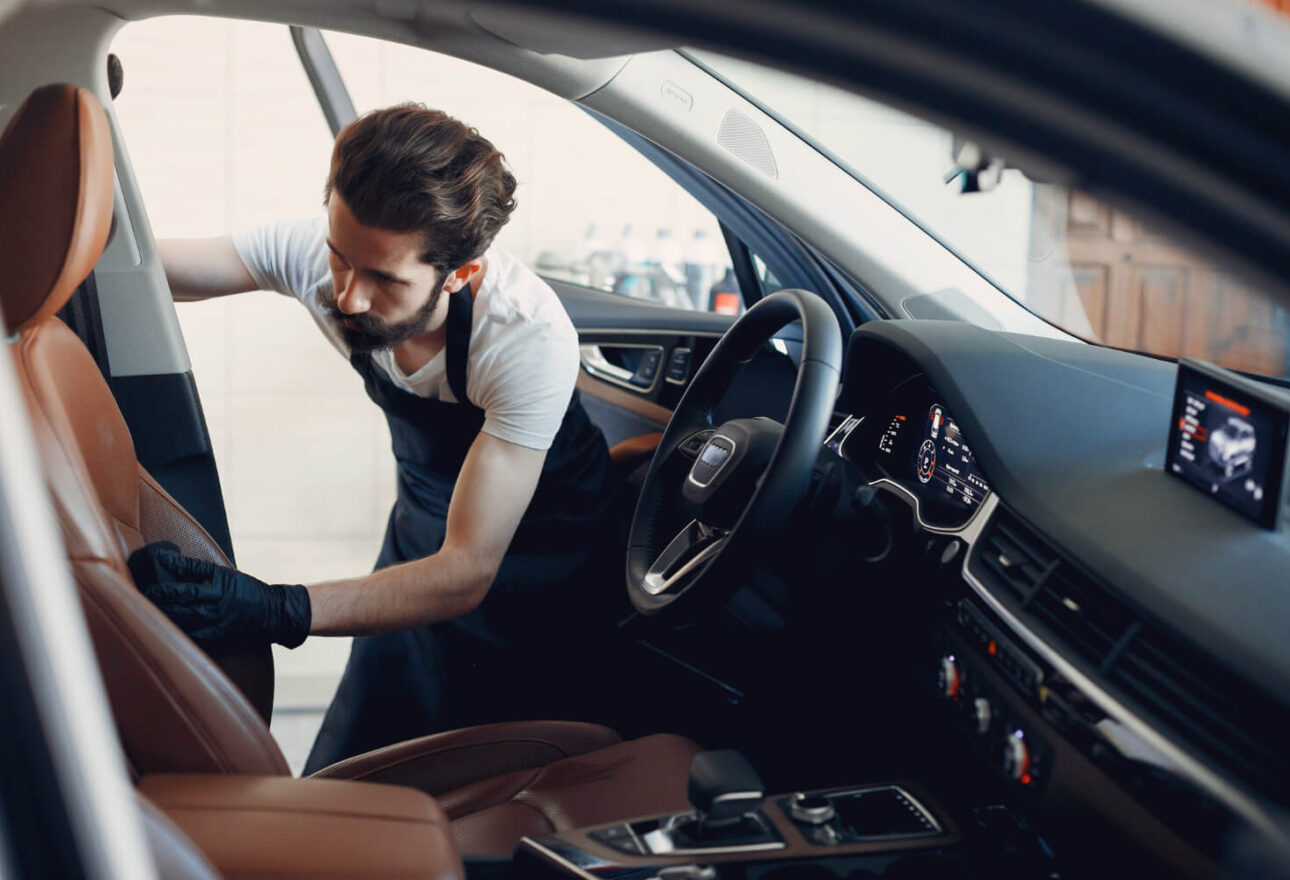
Automotive interior manufacturing requires much more than an attractive visual finish. Every cover, panel, insert, carpet, trim component, and upholstered piece must fit specific dimensions, remain consistent across multiple units, and meet the quality standards established for each vehicle.
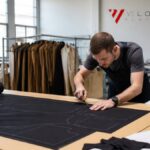
When these parts are processed manually, variations may appear due to pattern placement, material movement, operator experience, or differences between one template and another. In repetitive or customized production, even small deviations can lead to poor fit, rework, material waste, and delivery delays.
Digital cutting for automotive interiors helps reduce these variations through digital patterns, projection systems, cutting algorithms, and equipment capable of reproducing complex geometries with greater consistency. Velocity Plotters & Cutters provides automotive manufacturing solutions that combine cutting, digitizing, CAD preparation, and file conversion within a connected workflow.
Why Is Precision So Important in Automotive Interiors?
Automotive interior components often feature curves, perforations, cutouts, joints, and irregular shapes that must align with rigid structures, molded surfaces, or other parts of the assembly.
A seemingly minor deviation can result in:
- edges that do not align correctly;
- misaligned seams;
- uneven material tension;
- visible gaps between components;
- assembly difficulties;
- additional use of leather, vinyl, foam, or textiles;
- inconsistencies between parts for the same vehicle model.
Precision does not depend only on the cutting stage. It is also influenced by pattern quality, digitizing accuracy, file preparation, material positioning, and equipment configuration.
For that reason, improving automotive interior production requires evaluating the entire workflow, from the original pattern to the finished cut piece.
What Is Digital Cutting for Automotive Interiors?
Digital cutting is an automated process in which a machine reads files created or prepared in CAD software and executes the cutting paths directly on the material.
Unlike manual cutting, the geometry of each part is digitally defined. This makes it easier to reproduce the same pattern, manage design variations, and adapt the workflow to prototyping, customized manufacturing, or continuous production.
Velocity positions its automotive solutions as systems designed to integrate high-speed precision, material efficiency, and digital connectivity, especially for interior components and technical textiles.
1. Digitize Physical Patterns Correctly
Many automotive operations still rely on physical templates developed manually or patterns created from existing components. These patterns may be useful, but they can also be affected by wear, deformation, loss, or inconsistencies during reproduction.
Digitizing converts a physical template into an editable and reusable digital file. This makes it easier to preserve the original geometry, apply corrections, and share the pattern with design and production systems.
The Velocity V-Shoot Camera Digitizing System is designed to convert physical patterns into digital files compatible with CAD workflows. It uses camera-based, non-contact capture to transform paper patterns into files prepared for editing or production.
In automotive interior manufacturing, this process can be used to:
- preserve existing patterns digitally;
- reproduce parts for previous vehicle models;
- create variations of the same component;
- correct geometries before cutting;
- speed up prototype development;
- reduce dependence on physical templates.
A well-organized digital pattern library also improves version control. This helps the team identify the approved pattern and avoid using outdated templates.
2. Prepare and Optimize Parts with CAD Software
Once digitized, patterns must be reviewed and prepared before being sent to the cutting equipment. At this stage, dimensions, margins, reference marks, notches, perforations, and other operations required for assembly can be adjusted.
CAD solutions can also organize parts within the available material area. This process, known as nesting, aims to make better use of every section of leather, vinyl, foam, or technical textile.
Velocity offers VetiGraph CAD, a solution for pattern design and marker optimization, intended to support pattern creation and efficient material layout within an integrated digital workflow. Its purpose is to improve accuracy, reduce waste, and accelerate product development.
For automotive interiors, a CAD system can help:
- standardize dimensions;
- correct lines and curves;
- prepare variants for different models or trims;
- verify that related components fit together;
- optimize part placement on the material;
- reduce errors before cutting begins.
Correcting a pattern on-screen is usually more controlled and cost-effective than discovering the problem after material and production time have already been used.
3. Convert Files into the Format Required by the Equipment
Precision can also be affected when communication between design software and production machinery is unreliable.
Incompatible files, incorrect scale settings, or poor conversion can alter pattern geometry, cause data loss, or prevent equipment from interpreting certain lines correctly.
Easy-Plot is Velocity’s solution for converting CAD files such as .DXF and .DWG into output formats such as .PLT and .HPGL, commonly used in plotting and production preparation processes.
A controlled conversion process helps preserve:
- the original scale;
- vector structure;
- correct line relationships;
- equipment compatibility;
- continuity between design and production.
Before launching a full production run, it is also advisable to validate critical dimensions through a controlled test.
4. Use a Digital Cutter Suitable for Automotive Materials
Not all cutting systems deliver the same performance or are designed for the same materials. Automotive interiors may involve textiles, nylon, vinyl, leather, composites, foam, cardboard, technical films, carbon fiber, and fiberglass, depending on the application.
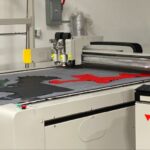
The Velocity ProCut-X Single Ply Cutter is a digital cutting system designed to deliver precision, speed, and reliability when processing single-layer materials. Velocity presents it as a solution suitable for automotive interiors and capable of working with materials such as leather, vinyl, foam, technical textiles, and selected composites.
Single-ply technology is especially useful when working with:
- high-value materials;
- customized parts;
- components with complex geometries;
- short or medium production runs;
- prototypes;
- on-demand orders;
- materials that should not be stacked.
Processing one layer at a time allows operators to better control the usable surface and adapt part placement to visible characteristics of the material.
5. Improve Placement with Digital Projection
Precision does not depend only on whether the blade follows the programmed path correctly. The pattern must also be positioned in the right place.
This is particularly important when the material includes:
- grain direction;
- textures;
- printed designs;
- visible defects;
- natural variations;
- restricted areas;
- required orientation.
The ProCut-X incorporates projection and cutting functions that allow patterns to be digitally aligned on the material. Velocity also highlights its ViewMatch™ system, designed to visually guide pattern placement on the work surface.
This type of assistance helps operators decide where to position each part before cutting. With leather, for example, it allows the operator to account for the characteristics of each section instead of treating the entire surface as uniform.
6. Automate Operations Beyond the Outer Cut
An automotive interior part may require more than an exterior contour. Depending on its purpose, it may also include:
- holes;
- notches;
- reference marks;
- internal cuts;
- straight cuts;
- alignment points;
- sewing or assembly guides.
When these operations are completed manually after the main cut, their position may vary from one piece to another.
Digital systems can incorporate multiple operations within the same file, allowing the equipment to execute them according to predefined coordinates. This helps preserve the geometric relationship between contours, marks, and perforations.
Automating these tasks can also simplify final assembly because the references are reproduced in the same position on every unit.
7. Consider Flatbed Solutions for Prototypes and Specific Parts
Some automotive operations need to process rigid or semi-rigid pieces, templates, cardboard, PVC, or other materials used during product development or production preparation.
The Velocity Flatbed Plotter and Cutter is designed to perform plotting and cutting operations on a flat surface. It can be used in apparel, footwear, furniture, and industrial textile applications and can process materials such as thick cardboard, paper, PVC, and plastic panels.
Within an automotive workflow, a flatbed solution can support:
- template development;
- sample production;
- auxiliary component preparation;
- geometry validation;
- testing before scaling production.
The choice between a single-ply conveyor cutter and a flatbed system depends on part size, material type, and production requirements.
8. Reduce Variation Between Operators and Production Batches
In manual cutting, results may depend heavily on each operator’s experience, applied pressure, and interpretation.
A digital system uses the same file and the same cutting path to reproduce every part. This helps maintain greater consistency across shifts, operators, and production batches.
Velocity highlights benefits of automated cutting such as software-controlled accuracy, consistent results, and easier execution of complex patterns.
Automation does not remove the importance of the operator. Instead, the operator’s role evolves toward tasks such as:
- selecting the correct file;
- preparing the material;
- configuring tools;
- checking quality;
- carrying out preventive maintenance;
- validating final results.
Automation allows employee expertise to focus on process control instead of relying entirely on manual skill to reproduce every contour.
9. Improve Material Utilization
Leather, technical textiles, vinyl, and other automotive interior materials can represent a significant portion of production costs.
Waste may result from:
- inefficient placement;
- cutting errors;
- incorrect patterns;
- duplicate pieces;
- scale problems;
- poor defect exclusion;
- excessive margins.
The combination of CAD, nesting, projection, and digital cutting helps address several of these issues. VetiGraph supports pattern preparation and layout optimization, while the ProCut-X uses projection and cutting functions designed to improve placement and material utilization.
Reducing waste does not simply mean placing parts closer together. It also requires consideration of orientation, surface quality, material direction, and the technical requirements of each component.
10. Integrate the Workflow from Pattern to Cutting
Precision decreases when every stage operates independently.
For example, problems may occur when:
- the physical pattern does not match the digital file;
- the software uses an outdated version;
- the file is converted at a different scale;
- the operator selects the wrong material;
- the machine interprets lines that should not be cut.
An integrated workflow may be organized as follows:
- The physical pattern is captured with V-Shoot.
- The file is reviewed and optimized in VetiGraph.
- The parts are arranged through nesting.
- The file is converted with Easy-Plot when required.
- The geometry is sent to the ProCut-X or the appropriate equipment.
- The operator validates placement and starts cutting.
- The finished part is inspected before moving to assembly.
Velocity presents its portfolio as a combination of hardware and software developed to connect digitizing, design, preparation, and cutting in industries such as automotive manufacturing.
Which Velocity Solutions Can Be Used for Automotive Interiors?
Velocity ProCut-X Single Ply Cutter
Suitable for digital cutting of single-layer materials and automotive applications that require precision, flexibility, and customized production. It can process materials such as leather, vinyl, foam, nylon, technical textiles, and selected composites.
V-Shoot Camera Digitizing System
Converts physical patterns into digital files prepared for editing and CAD integration. It is useful for preserving templates, creating variants, and reducing manual digitizing work.
VetiGraph CAD
Supports pattern creation, editing, and marker optimization. It helps prepare geometries before cutting and improve part placement on the material.
Easy-Plot
Converts DXF or DWG files into PLT or HPGL formats, helping connect CAD files with compatible output processes.
Velocity Flatbed Plotter and Cutter
Can support prototyping, template production, and cutting of rigid or semi-rigid materials on a flat surface.
Velocity Plotters
Velocity plotters can reproduce full-scale patterns and guides for validation, preparation, and production documentation. The product line includes pattern plotters, marker plotters, and combined printing and cutting solutions.
Benefits of Digital Cutting in Automotive Manufacturing
Implementing a digital workflow can help:
- improve part repeatability;
- reduce variation between batches;
- prepare complex geometries;
- minimize manual errors;
- improve material utilization;
- accelerate prototyping;
- support customization;
- preserve patterns digitally;
- connect design and production;
- simplify changes between vehicle models.
The final results depend on proper implementation, file quality, machine configuration, and the controls established throughout production.
How to Select the Right Solution
Before investing in a digital cutting system, companies should evaluate:
- materials to be processed;
- maximum part dimensions;
- production volume;
- frequency of design changes;
- customization requirements;
- CAD formats currently used;
- additional operations required;
- available floor space;
- operator training;
- technical support and spare parts availability;
- integration with the current workflow.
An operation focused on prototypes or customized components may have very different needs from a facility processing high volumes of repetitive parts.
For that reason, equipment selection should begin with a process analysis rather than only comparing speed or price.
Conclusion
Improving precision in automotive interiors requires control over every stage of the workflow: pattern development, digitizing, CAD preparation, file conversion, material placement, and cutting execution.
Digital cutting for automotive interiors makes it possible to transform physical and digital patterns into repeatable parts, reduce variation, and prepare complex geometries with greater consistency. When integrated with digitizing, nesting, projection, and file conversion systems, it can also improve material utilization and productivity.
Velocity Plotters & Cutters provides an ecosystem that includes the ProCut-X single-ply cutter, V-Shoot digitizing system, VetiGraph CAD, Easy-Plot, industrial plotters, and flatbed solutions. These technologies can work together to create a more precise workflow from initial development to the part ready for assembly.
Companies looking to modernize automotive upholstery and interior component manufacturing can evaluate their materials, production volume, geometries, and CAD workflow to determine which combination of solutions best fits their operation.
 EN_US
EN_US  ES
ES