
Introduction
In the apparel manufacturing industry, precision and efficiency are essential to maintaining a competitive operation. However, when evaluating industrial plotting solutions, many companies face a common question: what is the difference between a pattern plotter and a marker plotter? Although both types of equipment are part of the workflow in fashion, textiles, and garment production, their functions, applications, and benefits respond to different needs within the production process.
Understanding this difference is critical for making better investment decisions, optimizing resources, and choosing the right technology based on the type of operation. Velocity Plotters & Cutters offers specialized solutions for both needs, allowing businesses to adopt more accurate, scalable, and efficient tools for modern manufacturing environments.
What Is a Pattern Plotter?
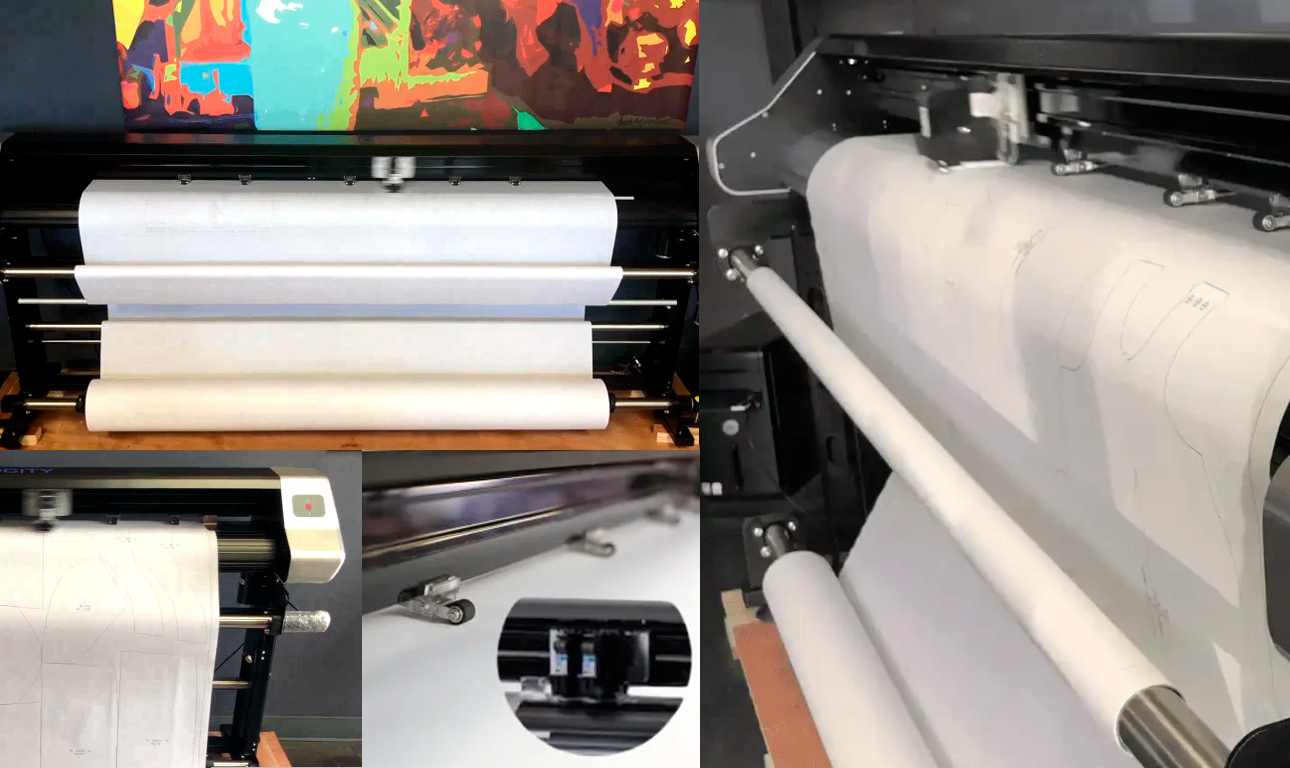
A pattern plotter is a machine primarily designed to print patterns used during the design, development, and pre-production stages. Its role is to accurately transfer digital pattern files onto paper, making it easier to create, review, and adjust patterns before moving to the next stages of production.
This type of plotter is especially useful for:
- design and development departments;
- pattern makers;
- apparel workshops;
- businesses working on new collections or prototypes;
- pattern validation and adjustment processes.
In other words, a pattern plotter is a solution focused on accuracy and control during the early stages of the workflow.
Within the Velocity Plotters & Cutters portfolio, one of the standout solutions for this need is the Velocity Tecnica One, a next-generation pattern plotter specifically designed for pre-production departments in the fashion, textile, and apparel industries. According to the company overview, this machine combines speed, precision, and ease of use in a format built to optimize pattern development workflows.
What Is a Marker Plotter?
A marker plotter is designed for a different stage of the process. Its main function is to print markers or optimized layouts used before cutting, helping organize pattern pieces efficiently across the material width in order to maximize fabric usage.
Marker plotting is a critical part of production because it directly affects material efficiency, waste reduction, and overall manufacturing performance. For that reason, marker plotters are typically associated with higher-volume production environments, where speed, consistency, and output capacity are essential.
This type of machine is ideal for:
- cutting preparation areas;
- textile production plants;
- companies with higher garment production volumes;
- operations aiming to optimize fabric usage;
- workflows where fast marker output is essential.
Velocity Plotters & Cutters offers several solutions for this need through its Velocity Vector line, designed to meet the demands of modern garment, textile, and pattern production.
Key Differences Between a Pattern Plotter and a Marker Plotter
Although both machines are important within the apparel industry, their differences become clear when analyzing their functions and role in the production process.
1. The Stage of the Workflow Where They Are Used
The most important difference is the moment in the workflow where each machine is involved.
- A pattern plotter is used during design, development, and pre-production.
- A marker plotter is used during cutting preparation and production.
This means they do not compete with each other. Instead, they solve complementary needs.
2. The Type of Output They Produce
A pattern plotter prints individual patterns or sets of pieces for review, development, or design validation.
A marker plotter prints optimized layouts of pattern pieces across the material width, with the goal of maximizing material efficiency and production performance.
3. Their Dimensions or Size
A pattern plotter is usually narrower or has a smaller width because it is designed to print individual patterns.
A marker plotter is wider because it is used to optimize the arrangement of patterns (marker layout or nesting), allowing a higher volume to be printed in less time while also improving material efficiency.
4. Operational Priorities
With a pattern plotter, the main priorities are usually:
- precision;
- print clarity;
- ease of use;
- support for product development.
With a marker plotter, the priorities are more focused on:
- speed;
- continuous performance;
- production capacity;
- scalability;
- consistency in high-volume output.
5. The Type of User Within the Company
A pattern plotter is more commonly associated with:
- pattern makers;
- designers;
- development technicians;
- pre-production teams.
A marker plotter, by contrast, is usually used by:
- production departments;
- lay planning personnel;
- cutting supervisors;
- industrial operations with ongoing demand.
When Should You Choose a Pattern Plotter?
A pattern plotter is the best option when a company needs to strengthen its product development process, create or validate patterns with greater precision, and improve agility during pre-production.
It is especially recommended for businesses that:
- develop new collections frequently;
- work on samples or prototypes;
- need to make regular pattern adjustments;
- want to improve accuracy during the design stage;
- want stronger integration with CAD pattern-making software.
In this scenario, the Velocity Tecnica One is a highly relevant solution, since it was specifically designed to meet the needs of pre-production departments in fashion, textile, and apparel manufacturing. Its focus on precision, speed, and ease of use makes it a strong option for businesses looking to optimize pattern development.
When Should You Choose a Marker Plotter?
A marker plotter is more appropriate when the priority is improving production efficiency and optimizing material usage before cutting. In other words, when the company needs faster and more consistent marker output to support production flow.
It is ideal for businesses that:
- handle larger production volumes;
- want to reduce fabric waste;
- need faster lay preparation;
- require scalability;
- want greater consistency in industrial workflows.
For these needs, Velocity offers several configurations within the Velocity Vector line:
Velocity Vector One
The Velocity Vector One is an advanced industrial plotting solution designed to meet the demands of modern garment, textile, and pattern production. It is available in multiple widths and can adapt to different workflows and production volumes.
Velocity Vector Two
The Velocity Vector Two includes two heads or markers and is designed to deliver both precision and speed in lay plotting, adapting to both smaller production environments and higher-volume operations.
Velocity Vector Four
The Velocity Vector Four is the fastest model in the line, featuring four independent print heads and built for large-scale operations that require extremely high speed and high-volume output.
Do You Need One or the Other, or Both?
The answer depends on the type of operation each company has. In some cases, a business may only need a pattern plotter if its main focus is development, pattern making, or smaller-scale production. In other cases, a more robust apparel plant may require a marker plotter to improve output and material efficiency in production.
However, many companies gain greater value by integrating both solutions into their workflow. This allows them to strengthen both the development stage and the preparation-for-cutting stage, creating a more connected, accurate, and efficient operation.
Velocity Plotters & Cutters offers an integrated approach that supports companies across different phases of the production process, from pattern creation to marker preparation and complementary workflow technologies.
Beyond Plotting: A More Complete Workflow for Apparel Manufacturing
In addition to its plotting solutions, Velocity also offers tools that strengthen the broader apparel production ecosystem.
For example, VetiGraph CAD provides a CAD software suite designed to meet the demands of modern apparel production, helping optimize productivity, reduce waste, and maintain technical accuracy. Meanwhile, Easy-Plot simplifies the conversion of CAD files such as DXF or DWG into print-ready formats like PLT or HPGL.
The company also offers complementary solutions such as V-Shoot for digitizing physical patterns, as well as cutting systems like the Velocity ProCut-X Single Ply Cutter and the Automatic Multi-Ply Cutter, enabling manufacturers to build a more advanced and connected workflow for the apparel industry.
Conclusion
Understanding the difference between a pattern plotter and a marker plotter is essential for choosing the right technology based on each company’s operational needs. While the first supports development, accuracy, and pre-production, the second is focused on optimizing efficiency, speed, and material usage during cutting preparation and production.
Velocity Plotters & Cutters offers specialized solutions for both scenarios. The Velocity Tecnica One addresses the needs of pattern development and pre-production, while the Velocity Vector One, Two, and Four provide scalable options for industrial marker plotting across different production levels.
For companies looking to improve their competitiveness in fashion, textiles, and garment manufacturing, choosing the right solution can make the difference between a limited workflow and a more efficient, accurate, and growth-ready operation.

 EN_US
EN_US  ES
ES