
Last Updated: November 28, 2026
Quick Summary
The manufacturing automation trends in the UK point to digitizing the pattern room before the shop floor, since paper patterns that never became files are the real barrier. PwC projects the median share of industrial manufacturers with highly automated processes rising from 18% to 50% by 2030, and 84% of small and midsize manufacturers surveyed have begun digitizing operations.
- Digitize paper patterns into CAD files first, then move to plotting and automatic cutting.
- V-Shoot exports DXF, AAMA DXF and PLT from paper patterns.
- Vetigraph handles grading, marker making and automatic nesting with fabric matching.
- Tecnica One and Vector series plotters print patterns and markers on paper only.
- Plotters read PLT, HPGL and HPG natively; DXF and DWG need Easy-Plot conversion.
Table of Contents
- What are the manufacturing automation trends UK factories should watch?
- Industry 4.0 in garment manufacturing moves from paper to digital files
- CAD software for garment manufacturing and the nesting payoff
- Digital skills training for garment workers keeps adoption on track
- Frequently Asked Questions
What are the manufacturing automation trends UK factories should watch?
Manufacturing automation trends point to one conclusion: the factories pulling ahead are digitizing the pattern room first, not the shop floor. That order matters. Apparel and sewn-product manufacturers often try to automate cutting before their patterns exist as clean digital files.
The wider data backs the direction of travel. PwC’s 2026 industrial manufacturing outlook projects the median share of industrial manufacturers with highly automated processes rising from 18% to 50% by 2030. ECI Solutions’ 2026 manufacturing trends report found 84% of small and midsize manufacturers surveyed had begun digitizing their operations.
For garment factories, that digitization runs through four connected stages:
- Pattern digitizing: converting paper patterns into CAD files with a camera-based system such as V-Shoot, which exports DXF, AAMA DXF and PLT.
- CAD design and nesting: grading, marker making and automatic nesting in software such as Vetigraph, which we sell and support.
- Pattern plotting: printing full-size patterns and markers on paper with the Tecnica One or Vector series. These plotters print on paper only; they do not cut.
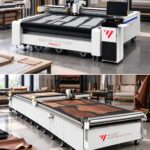
- Automatic cutting: single-ply and large-format cutting of fabric, leather and foam with ProCut-X or ProCut XL.
Automate UK’s 2024 industry insights report found 83% of respondents believe automation is increasing across manufacturing, while noting smaller companies often face barriers. The practical barrier is rarely the machine. It is the paper pattern that never became a file.
The article lays out four connected stages that take a garment factory from paper patterns to automated cutting.
| Stage | What it does | Equipment or software |
|---|---|---|
| Pattern digitizing | Converts paper patterns into CAD files | V-Shoot, camera-based |
| CAD design and nesting | Grading, marker making and automatic nesting | Vetigraph |
| Pattern plotting | Prints full-size patterns and markers on paper | Tecnica One or Vector series |
| Automatic cutting | Cuts fabric, leather and foam | ProCut-X or ProCut XL |
Industry 4.0 in garment manufacturing moves from paper to digital files
Industry 4.0 in garment manufacturing is the shift from physical pattern libraries to digital files that flow between design, marker making and cutting without re-entry. A pattern digitized once can be graded, nested and plotted repeatedly, which is why this step unlocks everything downstream.
The transition creates its own risks. IfM Engage at the University of Cambridge describes a case study titled “From Automation Ambition to $15M Impact,” though the published summary does not detail the intervention behind that figure. What it confirms is that automation programs are being measured in financial outcomes, not machine counts.
Teams that digitize patterns but keep printing markers on an old plotter can stall at the same throughput they had before.
If your line is stalling mid-transition, our guide to reducing garment production bottlenecks covers where work-in-progress tends to pile up. For a deeper look at waste, read how CAD/CAM automation reduces textile waste.
CAD software for garment manufacturing and the nesting payoff
CAD software for garment manufacturing is the layer where material savings are actually won or lost. Nesting decides how pattern pieces sit on the fabric, and a tighter marker means less waste per cut.
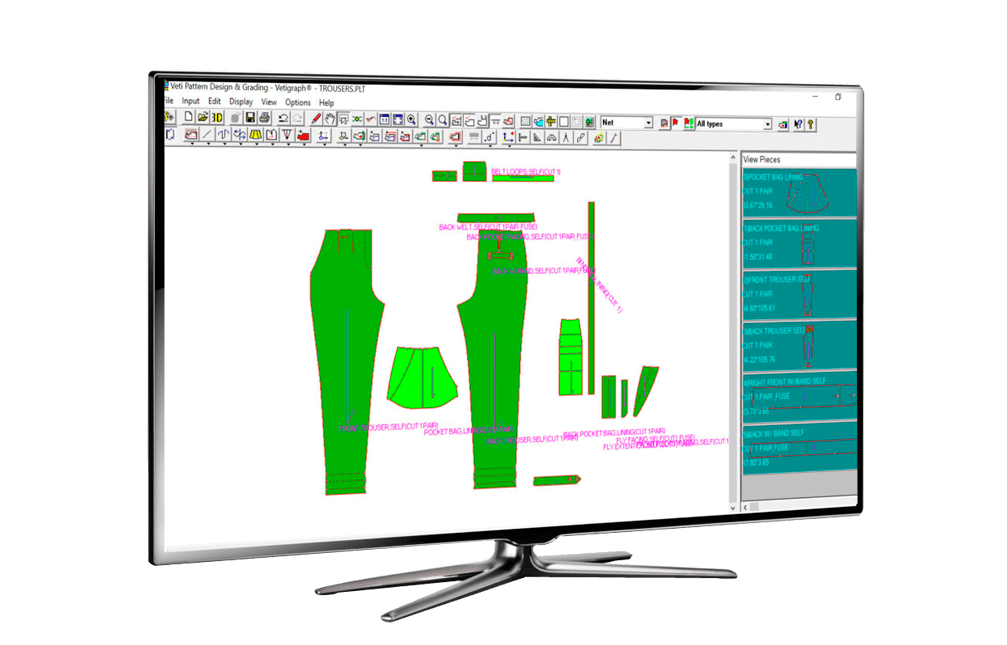
Vetigraph covers pattern creation, grading and marker making, with automatic nesting, piece rotation and flipping, and matching for striped, plaid and printed fabrics with distortion compensation. It supports DXF, HPGL and ISO Cutfile, and integrates with Adobe Illustrator. It is third-party software that we sell and support, not a product we develop. You can explore Vetigraph CAD design and nesting to see how the modules fit together.
The techniques behind a tight marker are worth learning properly. Our guide to garment pattern nesting best practices walks through the practical methods that reduce fabric waste.
Digital skills training for garment workers keeps adoption on track
Digital skills training for garment workers is the difference between a system that runs and one that sits idle. Pattern makers who have worked in paper for twenty years need time with the CAD screen before nesting decisions feel natural.
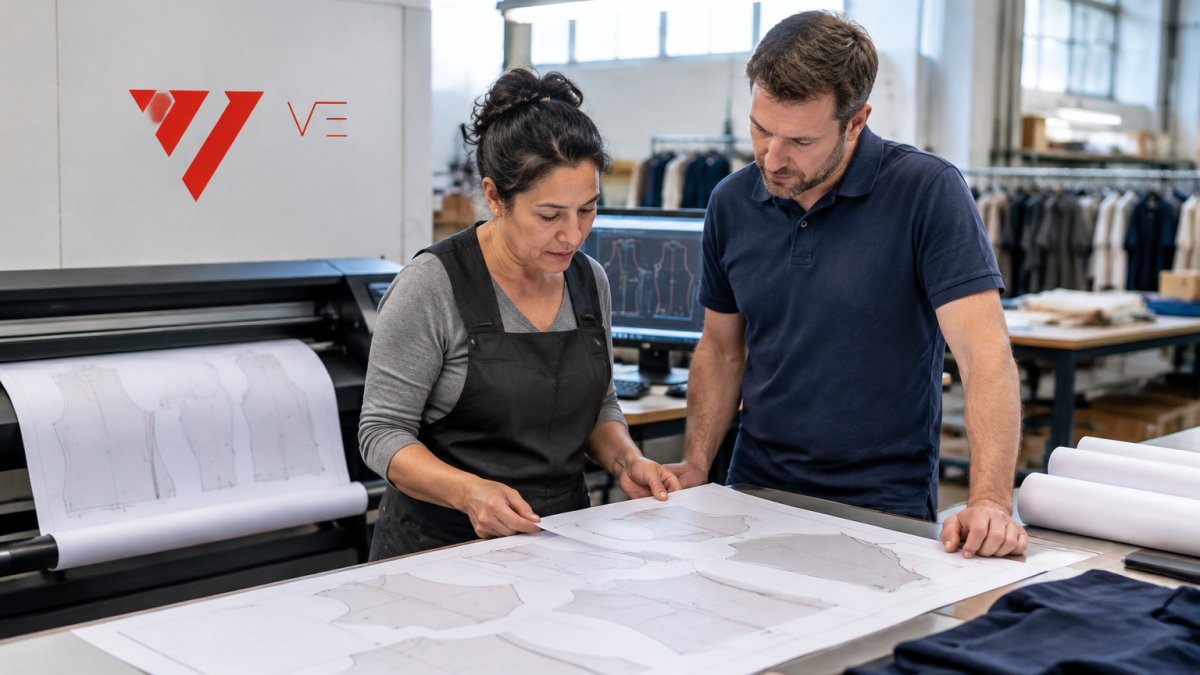
Our plotters read PLT, HPGL and HPG natively. DXF and DWG files need an optional conversion program, and Easy-Plot handles DXF, DWG and PDF conversion to PLT/HPGL. Knowing this before training day prevents the most frequent first-week stall.
The challenge is not choosing automation. It is sequencing it so each stage feeds the next, starting with digitized patterns and ending with a cutter that runs from the same files. Velocity Plotters supplies that full path: V-Shoot for digitizing, Vetigraph for CAD and nesting, the Tecnica One and Vector series for plotting patterns on paper, and ProCut-X and ProCut XL for automatic cutting. We provide onsite installation in the Los Angeles area, remote installation and training elsewhere, financing through TimePayment, and free material test cuts or pattern digitizing samples. Get started with Velocity Plotters and build a pattern-to-production workflow that holds up on the floor.
Frequently Asked Questions
How is manufacturing automation changing garment production?
It moves the paper out of the middle of the process. Patterns are digitized with a camera-based system such as V-Shoot, graded and nested in CAD, printed full-size on a plotter, then cut on an automatic cutter. The pattern maker stops re-drawing by hand and the cutting room stops tracing. Factories that adopt this in stages keep production running while each step goes live.
What digital skills do garment workers need for Industry 4.0?
Three things: reading a DXF or PLT file, editing a marker in CAD, and running a plotter or cutter without damaging material. Most pattern makers already have the pattern knowledge; the software is the new part. Training is usually short and role-specific. Velocity Plotters provides onsite installation in the Los Angeles area and remote installation and training elsewhere.
How can small manufacturers adopt automation effectively?
Start with the step that costs the most time. If patterns are still on paper, digitize them first; if markers are traced by hand, add CAD and nesting. Plotters print patterns and markers on paper only, so they are a low-risk first purchase before a cutter. Financing through TimePayment spreads the cost, and a free material test cut or pattern digitizing sample shows how the equipment handles your actual fabric before you commit.


 EN_US
 ES