
Last Updated: November 19, 2026
Resumen rápido
To reduce garment production bottlenecks, identify the operations limiting output, improve pre-production planning, and control work in progress. Measuring production times and addressing delays in pattern preparation, marker printing and cutting can help keep work flowing efficiently.
- Time each operation, from spreading and cutting to the first sewing stage, to identify delays.
- Look for growing queues and downstream idle time to identify potential bottlenecks.
- Fix workflow issues such as missing work aids, dull blades or late paper markers.
- Release styles only when patterns, markers and materials are ready.
- Control bundle release rates to prevent unnecessary work-in-progress buildup.
Tabla de Contenidos
- Step 1: Diagnose the Bottleneck Before You Fix It
- Step 2: Tighten Apparel Production Planning and Pre-Production Readiness
- Step 3: Drive Work in Progress Reduction in the Garment Industry
- Preguntas Frecuentes
Step 1: Diagnose the Bottleneck Before You Fix It
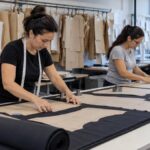
Garment production bottlenecks are the operations that cap your line’s output. In many garment shops, the cutting room, not the line, sets the pace.
Walk the floor with a stopwatch and time each operation, spreading, marking, cutting, bundling, and the first sewing operation, recording wait time between each. The station with consistently growing queues and downstream idle time is a strong indicator of a production bottleneck. Start by investigating the causes of that delay before making changes.
Teams often fix the slowest operator when the real problem is a missing work aid, a dull blade, or a late paper marker. Fix the flow before the person.
For a deeper look, see our guide to improving precision in manual cutting rooms and our walkthrough on modernizar los procesos de corte manual de ropa.
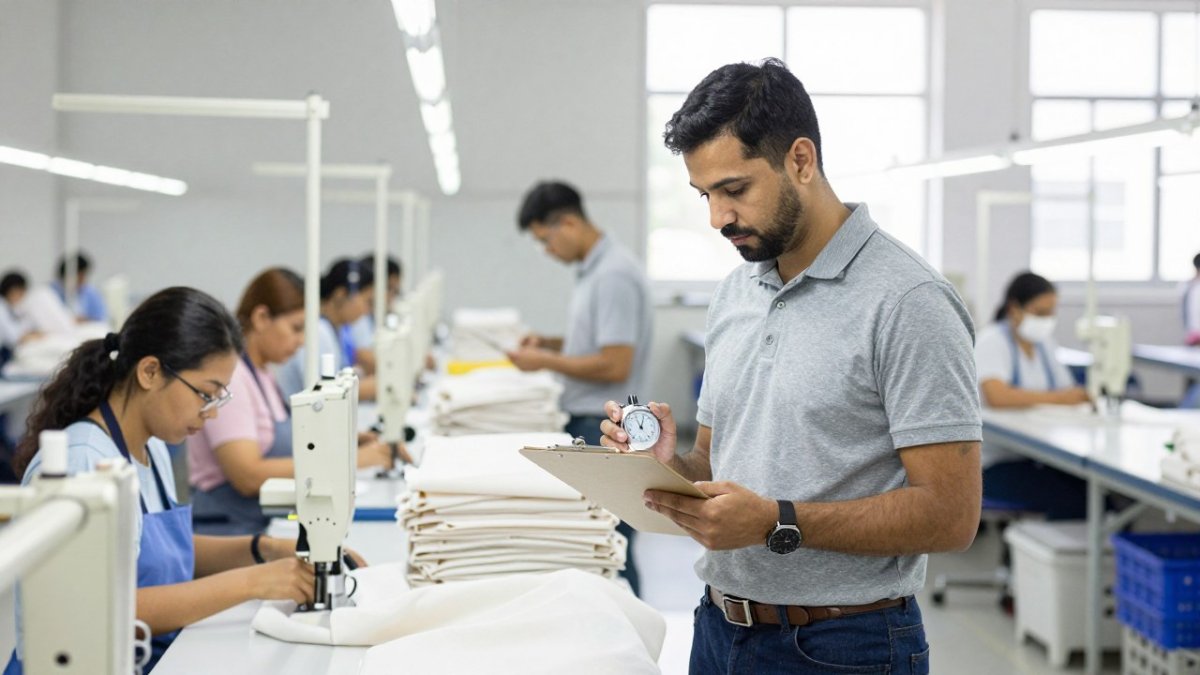
Here is the diagnostic walk the article describes, with what to time and what to look for.
|
What to do |
What to record |
What it tells you |
|---|---|---|
|
Walk the floor with a stopwatch |
Time each operation: spreading, marking, cutting, bundling, first sewing |
Where time actually goes |
|
Record wait time between operations |
Wait time between each operation |
Where work sits idle |
|
Find the longest queue |
Queue length and idle time downstream |
The station that caps output |
|
Check the work aid, blade and marker |
Missing work aid, dull blade, late paper marker |
Whether flow, not the operator, is the cause |
Step 2: Tighten Apparel Production Planning and Pre-Production Readiness
Apparel production planning happens before a single bundle reaches the floor. When it is loose, the line stalls waiting on markers, approvals, or material.
Releasing a style before the marker is final makes cutting wait, the line wait, and the delivery schedule slip. Lock these items before release.
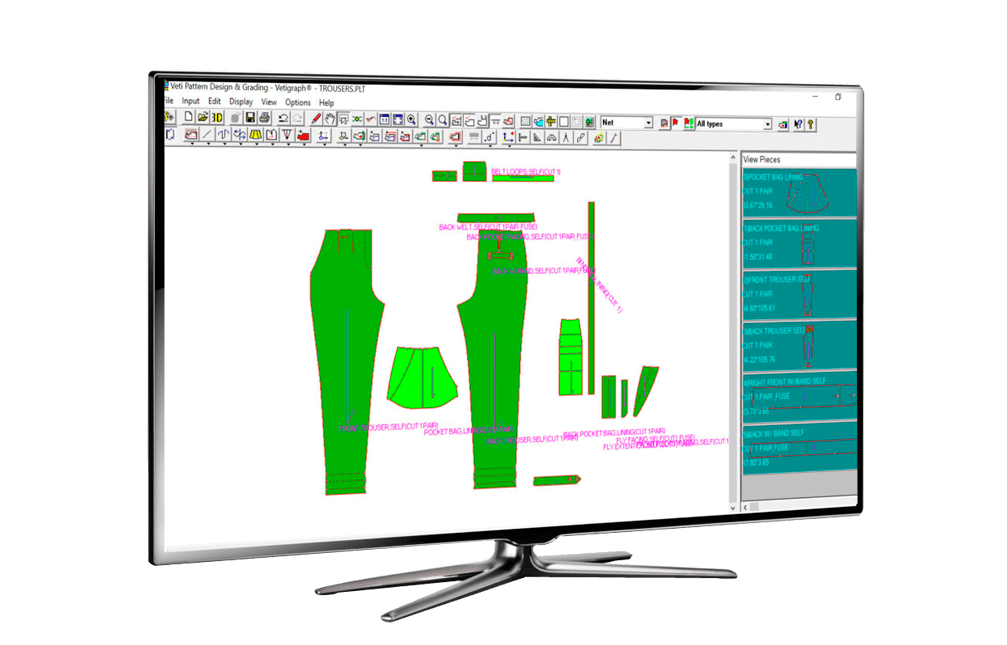
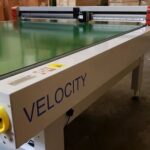
Digital tools can shorten this stage. V-Shoot turns paper patterns into DXF, AAMA DXF, or PLT files for grading and marker making. Vetigraph provides pattern, grading, marker and nesting tools that help improve material utilization before fabric is spread. Plotters like the Vector Two print full-size markers on paper, giving the cutting room a current marker to work from.
For the full picture, see our complete guide to garment manufacturing y Diseño y nesting CAD de Vetigraph.
Step 3: Drive Work in Progress Reduction in the Garment Industry
Work in progress reduction in the garment industry comes down to one rule: stop releasing bundles faster than the bottleneck can absorb them. WIP hides problems, eats floor space, ties up cash, and makes defects harder to trace.
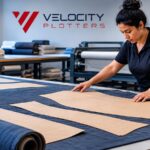
A pattern plotter that prints markers on demand can help the cutting room work closer to the production line’s pace instead of preparing unnecessarily large batches of markers. Machines such as the Vector and Tecnica One print full-size markers on paper for the cutting team to use as a guide.
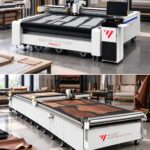
For automated fabric cutting, machines such as ProCut-X and ProCut XL can help reduce manual cutting variability and improve consistency, depending on the material, machine configuration and production requirements.
When you are ready to evaluate automated cutting, compare the two formats on our Máquinas de corte automáticas ProCut-X y ProCut XL page.
Reducing garment production bottlenecks is not about buying one machine. It is about measuring the real constraint, planning pre-production tightly, and cutting to the pace the line can absorb. Velocity Plotters supports that whole path: pattern digitizing with V-Shoot, CAD and nesting with Vetigraph, marker plotting on the Vector and Tecnica One series, and automatic cutting with ProCut-X and ProCut XL. We install onsite in the Los Angeles area and handle remote installation and training elsewhere, with financing through TimePayment. Ask us for a free material test cut or a pattern digitizing sample, then request a quote for your line.
Preguntas Frecuentes
What is a bottleneck in the garment industry?
A bottleneck is the operation with the lowest throughput on the line, the station where work piles up and downstream stations wait. It sets the pace for the whole production flow, so a slow marker printing step or an understaffed cutting room can hold up every station after it. Finding it means timing each operation and comparing cycle times, not guessing from the loudest complaint on the floor.
How can work-in-progress buildup be reduced on a garment production line?
Cap the number of bundles allowed between stations and release work only when the next station has room. Move cut pieces to the line in smaller, more frequent batches instead of one large drop. Track WIP counts at each station daily so a pileup shows up before it becomes a delay. Reducing WIP shortens cycle time and makes defects easier to trace back to the operation that caused them.
How can cutting room efficiency improve garment production flow?
Start with accurate markers: use CAD nesting software such as Vetigraph to maximize material use, then print full-size markers on a pattern plotter so the cutting team works from clear, current paper. Digitizing existing patterns with a system like V-Shoot removes manual re-drawing delays. For higher volume, an automatic cutter such as ProCut-X or ProCut XL keeps cut pieces flowing to the line without the variability of manual cutting.

 ES
 EN_US