
Tabla de Contenidos
- The Core Question: Automated Cutting Investment ROI
- Manual vs Automated Fabric Cutting: Speed, Precision, and Labor
- CNC Cutting System ROI: What the Numbers Actually Show
- Reducing Material Waste in Manufacturing Through Automation
- Hidden Costs and Risks: What Vendors Don’t Always Mention
- When Manual Cutting Still Makes Sense
- Making the Decision: Your Production Volume and Material Profile
- Preguntas Frecuentes
Last Updated: October 7, 2026
The Core Question: Automated Cutting Investment ROI
Is automated cutting worth the investment? The answer depends entirely on your production volume, material types, and current waste rates. For many manufacturers, the numbers work. For others, manual cutting remains the better choice.
We work with production managers across apparel, automotive, and furniture sectors who face this exact decision. The question isn’t whether automation is theoretically better, it is. The question is whether your operation generates enough volume to justify the capital outlay and operational transition.
Here’s what matters: automated cutting systems reduce material waste, increase throughput, and improve consistency. But they also require upfront investment, operator training, and workflow changes. Some operations see payback in 18 months. Others never recoup the cost because their volume doesn’t support it.
This guide breaks down what actually drives ROI in automated cutting, the hidden costs vendors don’t emphasize, and when manual cutting still makes sense. We’ll focus on transparent math rather than vendor claims.
Manual vs Automated Fabric Cutting: Speed, Precision, and Labor
Manual fabric cutting is slow and inconsistent. Automated cutting is fast and precise. That’s the simple version. The practical version is more nuanced.
A skilled cutter working with a manual blade can produce clean edges on straightforward patterns. They adapt quickly to material variations and handle complex geometries without reprogramming. But they also fatigue, make mistakes on repetitive cuts, and can’t match the speed of a CNC system running continuously.
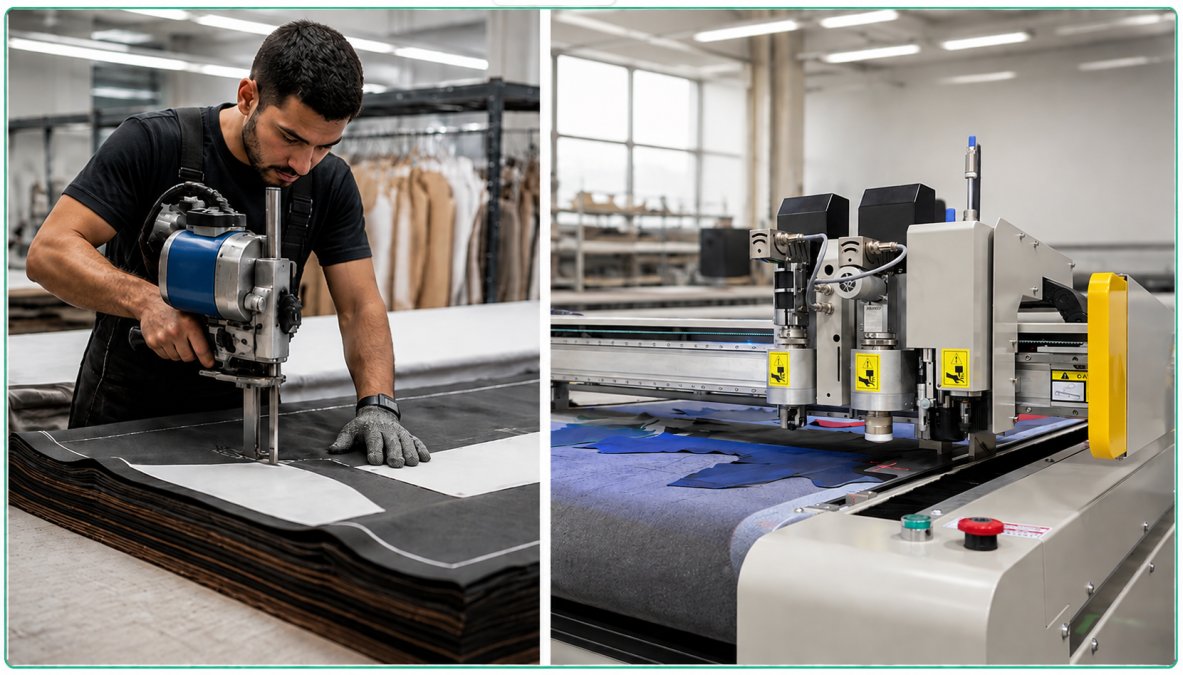
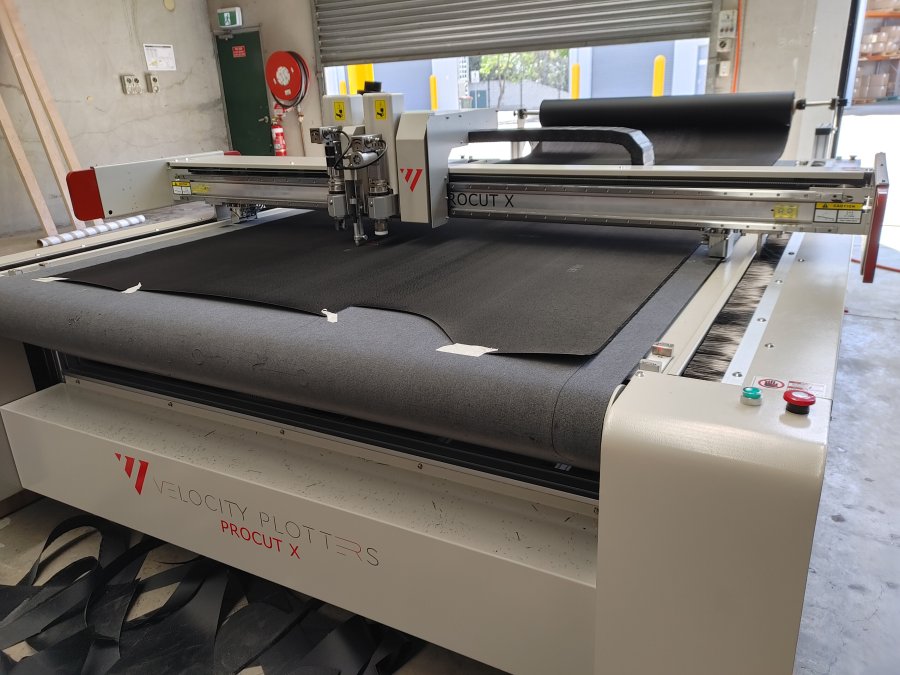
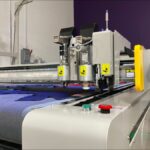
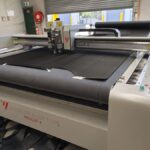
Automated systems like those using oscillating knife technology or laser cutting deliver consistency across thousands of cuts. A pattern cut at hour one matches the pattern cut at hour eight. The cutting head doesn’t tire.
The tradeoff is flexibility. Reprogramming a CNC cutter takes time. Changing blade height, speed, or pressure requires operator intervention. For high-volume, repetitive work, this is irrelevant. For short runs with frequent pattern changes, it’s a real constraint.
Labor requirements shift dramatically. A manual cutting room needs skilled cutters, people with years of training who command higher wages and are harder to retain. An automated system needs operators who can load material, monitor the process, and troubleshoot basic issues. Training takes weeks, not years. Wage requirements drop.
Precision and consistency are where automation wins decisively. Manual cutting introduces 2-5% variation in edge quality and cut placement. Automated systems hold tolerances to fractions of a millimeter. For apparel, this means fewer rework cycles and higher first-pass quality. For automotive interiors or composite components, it’s non-negotiable.
CNC Cutting System ROI: What the Numbers Actually Show
ROI calculations for CNC cutting systems require honesty about what actually costs money in your operation.
Start with material waste. Most manual cutting operations lose 8-15% of raw material to trim, mistakes, and inefficient nesting. A well-optimized automated system can reduce this to 2-4%. On a $100K monthly material spend, that’s $6K-$13K in monthly savings. Over a year, that’s $72K-$156K.
But here’s where vendors get creative: they often claim waste reduction of 20-30%, which assumes your current process is catastrophically inefficient or that you’re comparing to the worst manual operation in the industry. Be skeptical of numbers that large.
Labor savings are real but take longer to materialize. If you’re currently paying four cutters $45K each annually, that’s $180K in annual labor cost. An automated system might require one operator at $35K plus a maintenance technician at $50K.
The capital cost matters. A quality CNC cutting system ranges widely depending on cutting technology, speed, and automation level. Without specific pricing from vendors, assume you’re looking at a meaningful capital expenditure that requires financing or internal funding approval.
Operating costs include consumables (blades, nozzles, laser optics), maintenance, software subscriptions, and utilities. These add up to 10-15% of the system’s purchase price annually. A $250K system costs $25K-$37.5K per year to operate beyond labor.
Real ROI emerges when you combine waste reduction, labor savings, and increased throughput. If you cut your material waste by 10% and reduce labor costs by $95K annually, you’re looking at $120K-$150K in year-one benefits. A $300K system investment pays back in 2-2.5 years.
But this only works if your volume justifies it. A small shop cutting 500 patterns per month won’t see those savings. A mid-sized operation cutting 5,000 patterns monthly will.
Reducing Material Waste in Manufacturing Through Automation
Material waste is the most tangible ROI driver in automated cutting systems, and it’s where automation delivers measurable advantage.
Manual nesting, the process of arranging pattern pieces on a sheet to minimize scrap, relies on human judgment. Experienced cutters develop intuition, but they can’t optimize across thousands of possible arrangements. They also work with physical constraints: they need to see the patterns, handle the material, and account for grain direction or nap.
Automated nesting software considers all possible arrangements and selects the one that minimizes waste. For complex patterns with irregular shapes, the difference is substantial. A manual cutter might achieve 85% material use. Nesting software achieves 92-96%.
On high-value materials, leather, technical textiles, specialty fabrics, this difference translates directly to profit. A 5% improvement in use on $50K monthly material spend is $2,500 per month or $30K annually. Over five years, that’s $150K in recovered material value.
The catch: nesting software requires digital patterns. If your designs exist only as physical templates or sketches, you’ll need to digitize them first. That’s a one-time cost but a real one. Also, nesting software can’t account for every material variation. Leather has natural inconsistencies. Some fabrics have directional prints.
For manufacturers already working with CAD files or digital design tools, the transition to automated nesting is seamless. For those still using physical patterns, it’s an additional implementation step.
Waste reduction also improves sustainability metrics. Manufacturers increasingly face pressure from customers and regulations to document material efficiency. Automated cutting systems provide clear data: waste rates, use percentages, material cost per unit produced. This transparency is valuable for compliance and marketing.
Hidden Costs and Risks: What Vendors Don’t Always Mention
Automated cutting systems come with costs that don’t appear in the headline pricing.
Implementation disruption is real. Installing a new cutting system requires floor space reorganization, electrical infrastructure upgrades, and workflow redesign. Your cutting operation will slow down during transition.
Software integration is another hidden layer. Most modern cutting systems connect to design software, production planning systems, and inventory management. If your systems don’t talk to each other, you’ll need middleware or custom integration work. This adds cost and complexity.
Operator training takes longer than vendors suggest. A competent operator needs 4-6 weeks of hands-on training before running the system independently. During this period, you’re paying for training time plus your previous cutting capacity still needs to be maintained. That’s a real cost.
Maintenance and support are critical but often underestimated. A cutting system is a precision machine. Blades dull, belts wear, optical systems need alignment. If your vendor’s support is slow or requires technicians to travel, you face downtime risk. A 24-hour production delay costs money.
Equipment obsolescence matters more than you might think. CNC cutting technology evolves. Software updates eventually become incompatible with older hardware. A system purchased in 2026 might face software support limitations by 2031. Factor in a 7-10 year useful life, not 15-20.
Material compatibility can be overstated. A laser cutter works great on fabric and leather but can’t cut metal. A plasma cutter handles metal but struggles with delicate materials.
Vendor lock-in is real. Once you’re running on a specific system with specific software, switching is expensive and disruptive. This gives vendors use on maintenance pricing and software updates. Understand the contract terms and what happens if you want to migrate to a different system later.
When Manual Cutting Still Makes Sense
Automated cutting isn’t always the right answer, even for manufacturers who can afford it.
Low-volume operations don’t generate enough throughput to justify the investment. If you’re cutting 50-200 patterns per week, manual cutting with a skilled operator is more cost-effective than a $300K system running at 10% capacity. The math doesn’t work.
High-complexity, one-off patterns favor manual work. A bespoke furniture maker cutting custom upholstery patterns for individual pieces needs flexibility that automated systems can’t match. Programming a new pattern takes time. A skilled cutter can cut it in an afternoon. For custom work, manual beats automated.
Short production runs with frequent pattern changes create overhead that automated systems struggle with. If you’re switching patterns every 100-500 units, the time spent programming, setup, and optimization eats into the efficiency gains. Manual cutters adapt faster.
Material variability that’s hard to program favors manual work. Natural leather has inconsistencies. Vintage fabrics have wear patterns. Some materials require judgment calls about grain direction or defects. An experienced cutter navigates these intuitively. A CNC system needs explicit programming to handle variation.
Capital constraints are real. If you can’t access $250K-$500K in financing or capital budget, manual cutting remains your baseline. Trying to force automation into a cash-constrained operation creates financial stress that erodes the benefits.
Workforce considerations matter too. If you have a stable, skilled cutting team with low turnover, replacing them with automation might create social friction or severance obligations that undermine the financial case. Some manufacturers choose to keep manual cutting because the human cost of transition outweighs the operational gains.
The honest answer: automated cutting is best for high-volume, repetitive work with consistent materials and stable demand. It’s worst for custom work, low volume, or high material variability.
Making the Decision: Your Production Volume and Material Profile
The decision framework is straightforward. Answer these questions honestly.
What’s your monthly cutting volume? If it’s under 1,000 patterns, manual cutting is likely sufficient. Between 1,000-3,000 patterns, you’re in the gray zone where automation might help but isn’t mandatory.
What’s your current material waste rate? Measure it precisely. Track scrap weight against material input. If you’re losing less than 8%, automation won’t change your life. If you’re losing 12%+, waste reduction becomes a real ROI driver.
How variable are your patterns? Count how many unique patterns you cut monthly. If it’s fewer than 10, automation is straightforward. If it’s 50+, programming overhead increases.
What materials do you cut? Single-material operations (all fabric, all leather) are easier to automate. Multi-material operations need more flexible systems. Delicate materials need gentler handling. Thick materials need more power.
What’s your growth trajectory? If you’re stable or declining, automation is harder to justify. If you’re growing 20%+ annually, automation helps you scale without proportional labor increases.
Do you have capital available? This isn’t just about purchase price. Can you finance it? Can you absorb implementation costs? Can you maintain it?
Once you answer these, the decision becomes clearer. If you’re running high volume, single or limited materials, with stable patterns and capital available, automation is worth serious evaluation.
Velocity Plotters helps manufacturers across this spectrum. Our intelligent cutting systems are built for operations with varying production volumes and material profiles. We handle fabric, leather, and technical textiles. Our software integrates with existing CAD workflows, reducing implementation friction.
The real question isn’t whether automated cutting is theoretically better. It is. The question is whether it’s better for your specific operation at your specific scale. That requires honest math, not vendor promises.
Automated cutting systems deliver real ROI for manufacturers at scale. Velocity Plotters can help you evaluate whether automation makes sense for your operation and, if it does, implement it with minimal disruption. Industry guidance on manufacturing automation ROI y textile industry automation standards provide additional frameworks for evaluation.
Preguntas Frecuentes
What is the typical ROI period for industrial automated cutting systems?
ROI depends on your current waste rate, production volume, and material costs. Payback accelerates when labor savings and reduced rework costs are included.
How does automated cutting reduce material waste compared to manual methods?
Automated systems optimize nesting (the arrangement of pattern pieces on material) using specialized software that minimizes gaps between cuts. Manual cutting relies on operator judgment and typically leaves larger margins for error. Precision cutting also reduces rework from misaligned or damaged pieces, further improving yield.
Is automated cutting suitable for small-batch production runs?
Automated cutting works best for consistent, repeating batches where setup time is amortized across volume. Small-batch or highly variable production may not justify the investment. Evaluate your mix: if 60% of your work repeats in batches of 50+ units, automation is worth considering.
What maintenance requirements should be factored into an automated cutting investment?
Automated cutting systems require regular maintenance: blade or tool replacement, vacuum table servicing, and software updates. Downtime during repairs can disrupt production, so factor in service response time. Some manufacturers underestimate these ongoing costs when calculating true ROI.

 ES
ES  EN_US
EN_US