
Last Updated: November 4, 2026
Quick Summary
To calculate leather cutting machine ROI, compare total investment against annual net savings from labor, hide yield, capacity and downtime, then divide investment by savings for payback. A sound leather cutting machine roi model counts hide scrap and ramp-up, and still pays back at half your projected savings.
- Use your last three full months of production as the baseline period, pulled from payroll, hide ledger and maintenance log.
- Payback period equals total investment divided by annual net savings, including software, installation and ramp-up.
- Value capacity gains at contribution margin, not revenue, or you will overstate the return.
- A free material test cut with your own leather and pattern replaces assumptions with real yield numbers.
Table of Contents
- What to Include in Your Leather Cutting Machine ROI Calculation
- Manufacturing Equipment Payback Period Calculation
- How Leather Cutting Material Yield Improvement Affects ROI
- Frequently Asked Questions
What to Include in Your Leather Cutting Machine ROI Calculation
A leather cutting machine ROI calculation compares what you spend on equipment against what you save in labor, materials, and lost production time. Get those four numbers right and the decision usually makes itself.
The stakes are real. The U.S. cutting machine and equipment market is valued at $5.57 billion in 2026, with a projected 3.01% CAGR through the forecast period (Mordor Intelligence market sizing).
Teams often count the machine and forget the hide.
(https://www.researchgate.net/publication/396001144_Measuring_ROI_of_data_and_analytics_programs_A_framework_for_enterprise_impact)). Run your savings at half strength. If the payback still works, the project is sound.
Watch out: a template is a projection tool, not a promise. Calculator outputs depend entirely on the inputs you feed them, so treat every result as an estimate to test, not a guarantee.
Manufacturing Equipment Payback Period Calculation
Manufacturing equipment payback period calculation is total investment divided by annual net savings.
Start with the savings side, and count only what you can defend:
- Labor reduction: hours removed from cutting, spreading, and re-cutting. Use a loaded wage rate that includes payroll taxes and benefits, not the base hourly rate.
- Waste reduction: fewer square feet of hide in the scrap bin, valued at your actual purchase cost per square foot. On leather this is usually the largest single line.
- Capacity gain: extra units shipped without adding a shift. Value it at contribution margin, not revenue, or you will overstate the return.
- Downtime recovery: the production hours a stopped or slowed manual process costs you. This opportunity cost is often the difference between a marginal project and a clear one.
Now the cost side. Total investment is not just the machine.
How financing changes the payback. Paying over time through TimePayment does not change total investment, but it changes the cash-flow picture.
Run the payback three ways. Once at your full projected savings, once at 75%, and once at 50%. If the project still pays back inside your target window at half strength, it is robust. If it only works at full projection, it is a bet, not a plan.
Velocity ProCut-X Single Ply Cutter →
A typical target ROI for industrial machinery sits between 15% and 25% (United Lift equipment ROI benchmarks).
Watch out: a payback period computed on savings that only appear after a full year of steady production will flatter the project. Build the ramp-up months into the first year.
How Leather Cutting Material Yield Improvement Affects ROI
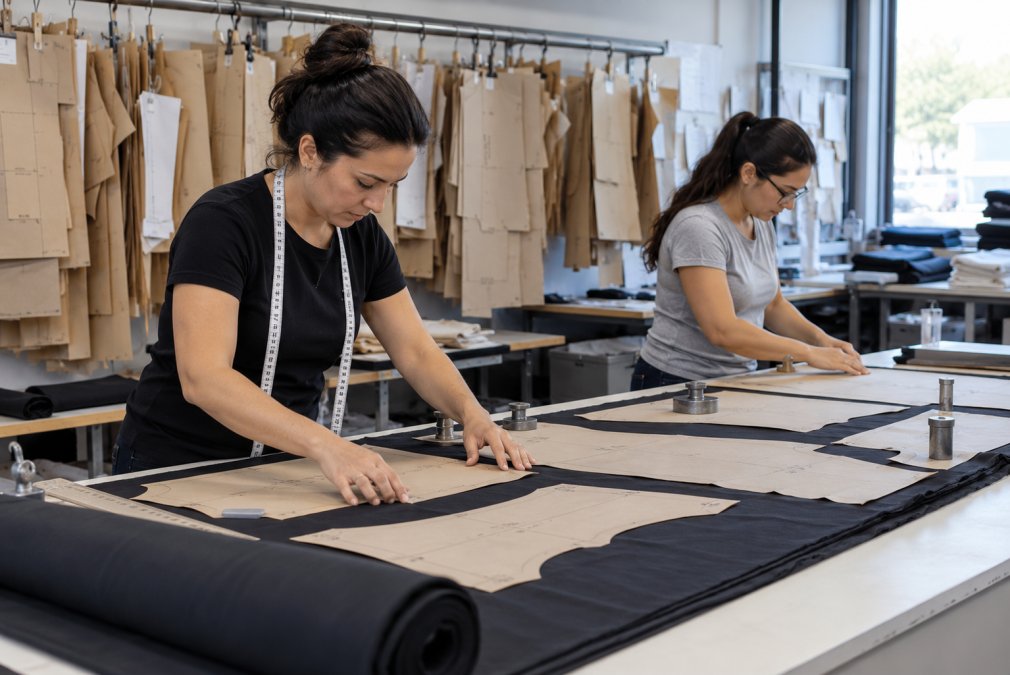
Leather cutting material yield improvement is the single biggest lever in the model, and the one most spreadsheets underweight. Leather is not fabric. Hides vary in shape, stretch, and defects, so nesting quality drives how much usable material comes off each hide.
The market data supports the shift. The leather smart cutting machines market is projected to grow at 8.8% CAGR from 2026 to 2033 (LinkedIn Pulse leather cutting market forecast), largely on waste reduction and labor savings.
Here is where the four product lines connect. The V-Shoot Camera Digitizing System converts existing paper patterns into digital files. Vetigraph CAD and nesting software then nests those pieces across the hide. A pattern plotter such as the Vector or Tecnica One prints the marker on paper so the cutting room works from the same plan. For shops focused on leather goods, our footwear and leather goods solutions show how those steps fit together.
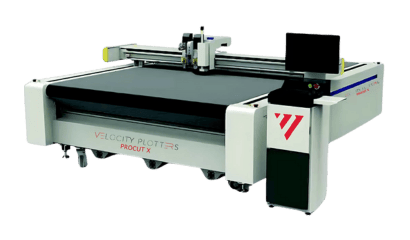

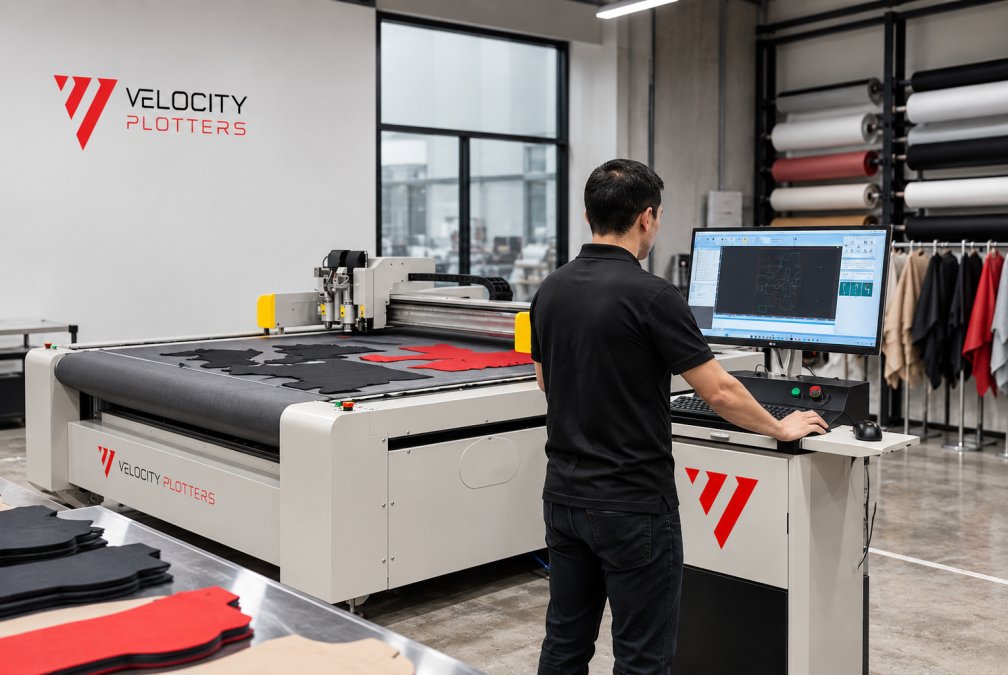
(/velocity-procut-xl-large-format-cutting-machine/) for standard production runs, or the [ProCut XL large format machine](/es/financiacion-de-equipos-sin-complicaciones/) if you cut long panels and oversized pieces. For capital planning, our equipment financing page covers flexible payment options for qualified buyers.
You do not need to guess at your payback period. Get a quote, get a test cut, and put your own hides through the model.
Frequently Asked Questions
How do you calculate ROI for a leather cutting machine?
Subtract total annual operating costs from total annual savings, then divide that net benefit by the total investment and multiply by 100. Savings come from labor hours freed up, material waste reduced, and throughput gained. Include the machine, installation, software, and training in the investment figure.
How do you calculate the payback period for production equipment?
Divide total investment by annual net savings. If a machine and installation total a given amount and it saves a set amount each year, the result is the number of years to break even. Use conservative savings estimates so the payback period you present holds up when production volumes shift.
Is an ROI worksheet or spreadsheet useful for evaluating cutting equipment?
Yes. A leather cutting machine ROI worksheet forces you to list every cost and saving in one place, which exposes gaps in your assumptions. Build one tab for capital and operating costs, one for labor and material savings, and one for the payback calculation. Update it with your own production data rather than vendor estimates.
How can material yield affect the ROI of leather cutting equipment?
Leather hides have irregular shapes and defects, so nesting quality decides how much usable material comes out of each hide. Model yield improvement separately in your worksheet.
The real question is not whether automation pays back, but whether your numbers are honest enough to tell you when. Velocity Plotters supplies the full pattern-to-production workflow, from V-Shoot digitizing and Vetigraph nesting to plotters and ProCut cutting machines, with onsite installation in the Los Angeles area and remote training elsewhere. Get started with Velocity Plotters and build an ROI case your own production floor can verify.





 EN_US
 ES