
Table of Contents
- Why Mid-Sized Apparel Manufacturers Need a Lectra Alternative
- Feature Comparison: Top Alternatives at a Glance
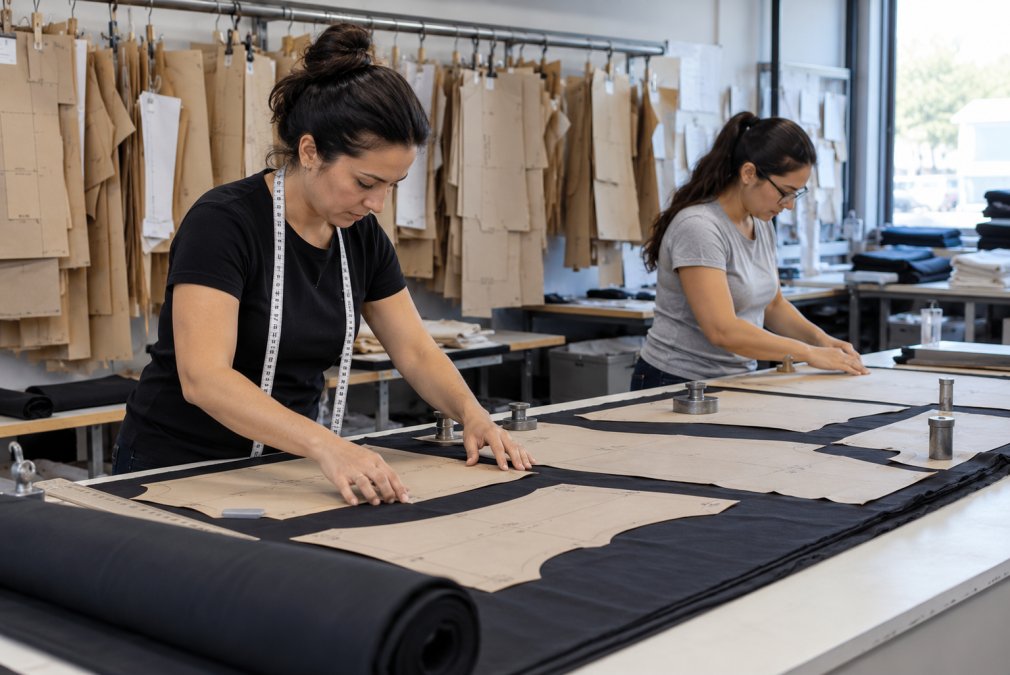
- Digital vs Manual Pattern Cutting Efficiency
- Apparel Manufacturing Automation Tools That Fit Mid-Market Budgets
- Fashion PLM Software Pricing: What to Expect and How to Budget
- Total Cost of Ownership and ROI for Mid-Sized Manufacturers
- How to Choose the Right Lectra Alternative for Your Operation
- Frequently Asked Questions
Last Updated: September 28, 2026
Why Mid-Sized Apparel Manufacturers Need a Lectra Alternative
Mid-sized apparel manufacturers need a Lectra alternative because enterprise-grade cutting and PLM systems carry a total cost of ownership that rarely matches mid-market production volumes. This guide from Velocity Plotters breaks down the real options, the pricing models, and the migration risks that decide whether a switch pays off. According to the U.S. Bureau of Labor Statistics apparel manufacturing sector overview, the industry has steadily consolidated, which means the firms still standing are competing on operational efficiency rather than scale alone.
Feature Comparison: Top Alternatives at a Glance
The strongest alternatives for mid-sized apparel operations split into three categories: cutting and plotting hardware, 3D design software, and PLM or ERP platforms. Most mid-market firms need one from each category, not a single monolithic suite, and the criteria that matter at 50 to 500 employees differ from enterprise buyers’.
|
Platform |
Category |
Deployment |
Key Strength |
Integration Profile |
Best For |
|---|---|---|---|---|---|
|
Velocity Plotters |
Cutting and plotting |
On-premise hardware + desktop software |
Hardware and software from one vendor; nesting accuracy and material waste reduction |
Exports cut files and marker data; connects to CAD and PLM via standard file formats |
Mid-market shops scaling production without enterprise capital commitments |
|
CLO 3D |
3D design |
Cloud and desktop |
Real-time garment simulation, fit, and drape |
Imports 2D patterns; exports tech packs and OBJ/PDF assets |
Design teams cutting physical sample rounds |
|
WFX PLM |
PLM |
Cloud |
Tech pack management, vendor communication, calendar workflows |
API and file-based connections to ERP and CAD |
Brands coordinating factories across multiple regions |
|
AIMS360 |
ERP |
Cloud |
Inventory, orders, EDI, and financial reporting |
Built for apparel-specific order and inventory flows; connects to accounting |
Connecting design data to sales and finance operations |
Comparison Matrix: Cutting, PLM, and ERP Tools
Each platform solves a different problem, so the right stack depends on where your bottleneck sits. If fabric use is your pain point, cutting hardware comes first; if tech packs live in email threads, PLM comes first. AIMS360 fills the gap most cutting and PLM tools leave open: linking production data to inventory, wholesale orders, and accounting. Score each option against the criteria mid-market buyers actually weigh.
|
Decision Criterion |
Cutting Hardware |
3D Design |
PLM |
ERP |
|---|---|---|---|---|
|
Typical mid-market entry point |
Per-machine capital purchase plus software license |
Per-seat subscription |
Per-seat subscription, tiered by users |
Per-seat or per-transaction subscription |
|
Deployment model |
On-premise |
Cloud or desktop |
Cloud |
Cloud |
|
Implementation time |
Weeks (install, calibration, training) |
Days to weeks |
Weeks to a few months |
One to several months |
|
Primary data it owns |
Marker and cut files |
3D models and patterns |
Tech packs, BOMs, calendars |
Orders, inventory, invoices |
|
Integration burden |
Low, file exports |
Low, file exports |
Medium, API and file mapping |
High, accounting and EDI mapping |
|
Where mid-market projects stall |
Operator retraining |
Fit library setup |
Vendor adoption across factories |
Legacy accounting customization |
|
Best-fit trigger |
Fabric waste or throughput is the constraint |
Sample cost or speed is the constraint |
Coordination across factories is the constraint |
Order volume outgrows spreadsheets |
What the Matrix Reveals for Mid-Market Buyers
Three patterns show up repeatedly when mid-sized manufacturers run this exercise.
Integration Reality Check Before You Buy
Ask each vendor three questions in writing before you sign:
- What file formats and APIs does your system expose for the other tools on my list?
- Who owns the mapping work when my accounting system is customized?
- What does a reference customer my size say about go-live time and post-launch support?
Digital vs Manual Pattern Cutting Efficiency
Digital pattern cutting is more efficient than manual cutting on fabric use, consistency, and throughput, and the gap widens as order complexity increases. Manual marker making leaves gaps that add up across thousands of garments, while automated systems calculate optimal nesting layouts in seconds. The trade-off is real: manual cutting needs no software training and handles one-off pieces with zero setup, but digital cutting rewards volume and repetition.
Apparel Manufacturing Automation Tools That Fit Mid-Market Budgets
Apparel manufacturing automation tools that fit mid-market budgets tend to be modular rather than bundled: buy the cutting system now, add PLM when supply chain coordination becomes the constraint, and layer ERP when order volume outgrows spreadsheets.
Cutting and Plotting Systems
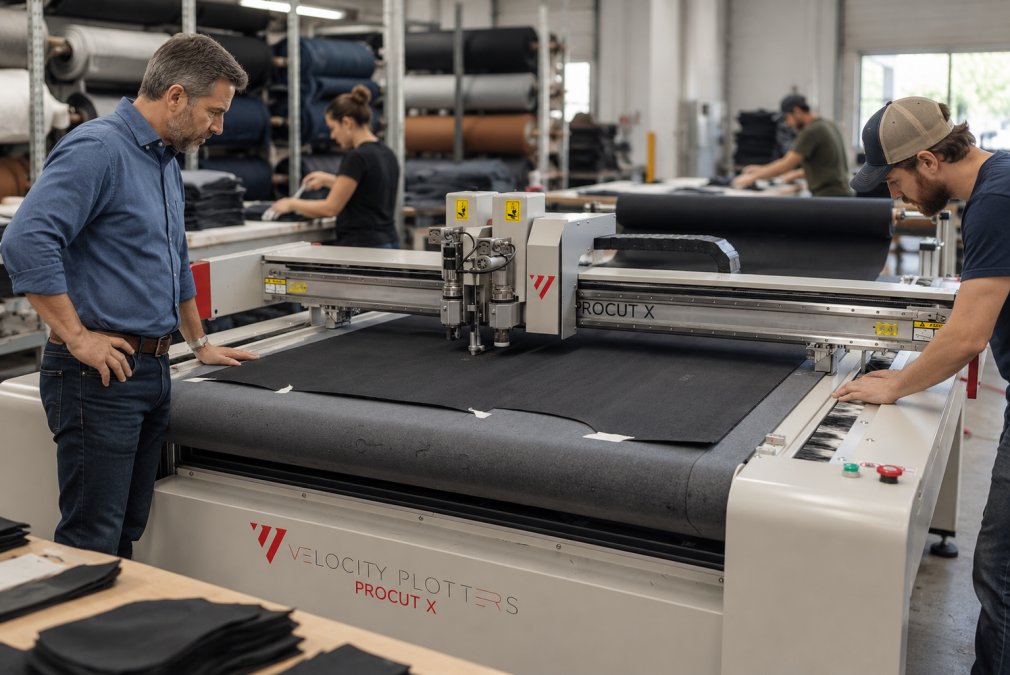
Velocity Plotters builds hardware and software together, which matters more than it sounds: when the plotter and nesting software come from one vendor, support calls do not turn into finger-pointing between two companies. The system targets material waste reduction and pattern plotting accuracy, and works across diverse materials.
PLM and ERP Platforms
CLO 3D handles 3D prototyping and fit testing, reducing physical sample rounds. WFX PLM centralizes tech packs and vendor communication for teams spread across factories. AIMS360 connects production to inventory, wholesale orders, and financial reporting. None replace cutting hardware, and cutting hardware does not replace them.
Fashion PLM Software Pricing: What to Expect and How to Budget
Fashion PLM software pricing almost always runs on a subscription model with quoted, not published, rates. CLO 3D, WFX PLM, and AIMS360 all list “contact for pricing” rather than a starting figure, which is standard in this category. Pricing depends on your configuration, production volume, and support requirements, so request a quote directly.
Total Cost of Ownership and ROI for Mid-Sized Manufacturers
Total cost of ownership for cutting and PLM systems includes far more than the purchase price. The three biggest hidden costs are migration, onboarding, and integration with your existing ERP and accounting systems. Buyers who model only the sticker price underestimate year-one spend, because the recurring costs live in the people and processes around a system, not the license line.
|
Cost Category |
What It Covers |
Why It Surprises Buyers |
|---|---|---|
|
Software subscription |
Licenses, modules, updates |
Seat count grows faster than expected as more roles need access |
|
Hardware |
Cutters, plotters, maintenance, consumables |
Downtime during production runs; blades and parts are recurring |
|
Migration |
Data transfer, legacy cleanup, pattern re-digitizing |
Old pattern files rarely import cleanly; paper markers must be rebuilt |
|
Onboarding |
Training, workflow redesign, temporary productivity dip |
Slower adoption than projected; experienced operators resist new steps |
|
Integration |
ERP and accounting connections, EDI mapping |
Custom work if systems are old or heavily customized |
|
Ongoing support |
Response times, spare parts, software updates |
Premium support tiers are often a separate line item |
How to Build a Year-One TCO Model
A defensible TCO model has four columns: one-time costs, recurring annual costs, productivity impact during ramp, and avoided costs. Most mid-market buyers build only the first two, then wonder why the project feels more expensive than the quote.
- One-time costs: hardware purchase, software setup fees, data migration labor, integration development, initial training hours.
- Recurring annual costs: subscriptions, support contracts, consumables, internal admin time.
- Ramp impact: the productivity dip while operators and planners learn the new workflow. A common pattern is a measurable dip for the first several weeks, then recovery and improvement.
- Avoided costs: fabric waste reduction, fewer physical samples, fewer expedited freight charges, reduced overtime from faster planning.
Migration and Onboarding Complexity
Migration complexity depends on how your pattern data is stored today. Shops moving from paper markers and spreadsheets face a larger cleanup than shops already running 2D CAD. A common mistake is underestimating training time. Teams that have cut manually for years need workflow changes, not just button-clicking instruction.
A practical migration sequence that mid-market shops use:
- Audit before you move. Inventory every pattern file, tech pack, and marker. Flag anything that exists only on paper or in a single person’s head.
- Pilot on one product line. Run the new system in parallel with the old one on a limited set of styles before cutting over.
- Digitize in batches. Rebuild legacy patterns in priority order, highest-volume styles first, one-offs last.
- Train by role, not by feature. Operators need different training than planners, who need different training than finance.
- Set a cutover date and hold it. Parallel running past a few weeks erodes the ROI case and exhausts the team.
Integration with Existing ERP and Accounting Systems
Integration is where mid-market projects stall. If your accounting system is older or heavily customized, expect custom work to connect production data to inventory and order records. Ask any vendor for a written integration scope before signing, and get the timeline in weeks, not “phases.”
Three integration patterns cover most mid-market shops:
- File-based handoff. The cutting or PLM system exports CSV or standard CAD files that your ERP imports on a schedule. Lowest cost, lowest real-time visibility.
- API connection. The systems talk directly. Higher setup cost, but inventory and order data stay current without manual steps.
- Middleware or custom bridge. Used when the ERP is old or heavily customized. Highest cost and the most common source of schedule slips.
How to Choose the Right Lectra Alternative for Your Operation
Choosing the right Lectra alternative comes down to matching the tool to your actual bottleneck, not the biggest feature list. Work through this checklist before requesting quotes:
- Identify your single biggest cost: waste, throughput, or planning delays
- Count how many materials you cut and whether each needs separate handling
- Audit where your pattern and tech pack data currently lives
- List every system that must connect: ERP, accounting, e-commerce
- Ask each vendor for references from shops your size
- Request a written integration and onboarding timeline
- Model year-one total cost, not just subscription fees
- Confirm support response times for production-run failures
Frequently Asked Questions
What are the most cost-effective alternatives to Lectra for mid-sized apparel brands?
Mid-sized brands often find better value in tools like Velocity Plotters for cutting and plotting, CLO 3D for 3D design, WFX PLM for product lifecycle management, and AIMS360 for ERP. These options offer modular pricing and scale without the overhead of enterprise systems. Evaluate total cost of ownership, including training and integration, rather than just upfront license fees. Many vendors provide quotes based on your production volume, so request a demo and pricing tailored to your operation.
How do Velocity Plotters compare to Lectra in terms of precision and material waste?
Velocity Plotters provides high-performance hardware and software integration designed to reduce material waste through intelligent scribing and cutting. While Lectra is a long-established name, Velocity Plotters focuses on mid-sized manufacturers with tailored technologies for diverse materials. The system aims to improve fabric utilization and accuracy, but exact waste reduction depends on your patterns and production workflow. Request a trial or reference from a similar shop to validate performance in your environment.
What features should mid-sized manufacturers prioritize when replacing legacy cutting systems?
Prioritize integration with your existing CAD/CAM and ERP systems, ease of onboarding, and support for multiple materials without custom tweaks. Look for automated pattern grading, marker making, and real-time production tracking. Cloud-based collaboration tools help design and production teams stay aligned. Also assess the vendor’s technical support responsiveness, since downtime during a production run is costly. A feature-by-feature comparison matrix can help you weigh these factors against your specific needs.
Is it better to invest in integrated PLM or standalone cutting hardware?
It depends on your pain points. If your bottleneck is design-to-production handoffs, tech pack management, and supply chain visibility, an integrated PLM like WFX PLM may deliver more value. If your main issue is cutting accuracy and material waste, standalone cutting hardware such as Velocity Plotters is more targeted. Many mid-sized firms start with the area causing the most operational inefficiency, then expand. Consider total cost of ownership and how each option integrates with your current ERP and accounting systems.
How does automation impact ROI for mid-sized apparel manufacturing facilities?
Automation typically improves operational efficiency, reduces material waste, and speeds up production workflows. For a mid-sized facility, ROI depends on your current waste rate, labor costs, and production volume. If you’re losing around 12% on waste, even a modest reduction can translate to significant savings over a year. Calculate payback by comparing the system cost against annual savings from fabric utilization, labor, and increased throughput. Request a detailed ROI projection from vendors based on your specific metrics.
Mid-market apparel manufacturers face a real squeeze: enterprise systems cost too much, and manual processes cost too much in waste and rework. Velocity Plotters closes that gap with integrated hardware and software, systems built to reduce material waste, and technical support designed for production environments where downtime is not an option. Get started with Velocity Plotters and build a cutting workflow that scales with your order volume instead of against it.



 EN_US
EN_US  ES
ES