
Last Updated: November 24, 2026
Resumen rápido
The top 10 automotive interior manufacturing industry trends in 2026 are digital pattern digitizing, automated upholstery cutting, CAD nesting for material yield, smart surfaces and embedded controls, digital cockpits, connected cabin ecosystems, premium materials, lightweight construction, sustainable production methods, and supply-chain resilience in interior components. Eight of the ten trends land on production, so growth rewards suppliers who produce the same parts with less material and fewer errors.
- IBISWorld puts automobile interior manufacturing at $36.5 billion across 318 businesses, growing at a 1.0% CAGR from 2021 to 2026.
- Add capacity in modules, such as a second plotter table or extra cutting head, rather than one large capital event.
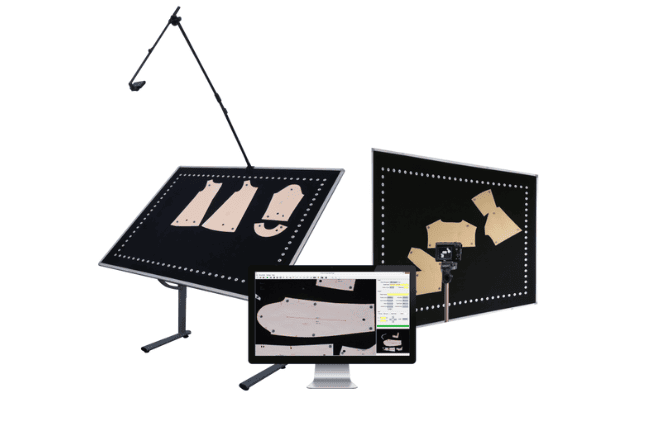
- Digital pattern digitizing converts paper patterns into CAD-ready files that export DXF, AAMA DXF and PLT.
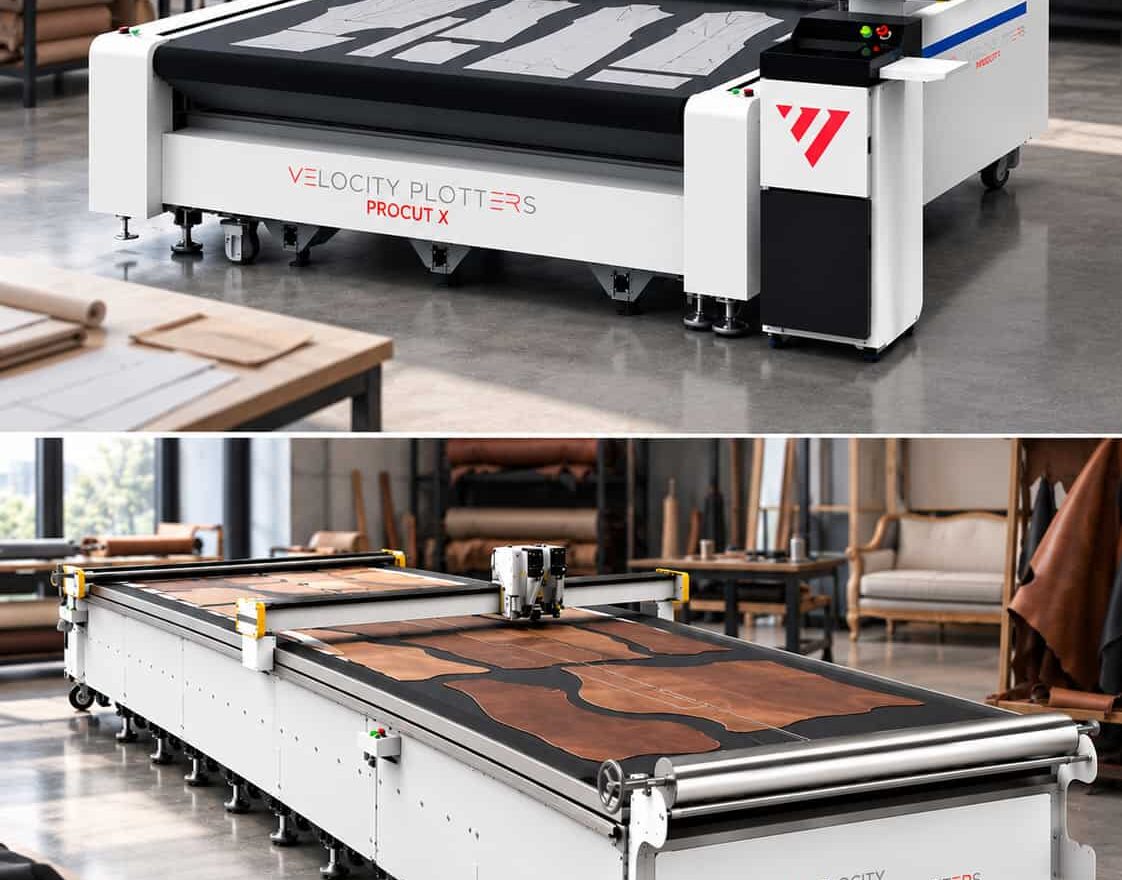
- The ProCut-X is a single-ply cutter with an automated conveyor that cuts fabric, leather, vinyl and foam.
- Keep patterns in CAD, not only on card stock, so material substitutions do not force a redraw.
Tabla de Contenidos
- What are the top 10 automotive interior manufacturing industry trends in 2026?
- Market Growth and the Interior Components Outlook
- Digital Pattern Digitizing for Automotive: From Paper to CAD
- Automotive Upholstery Manufacturing Automation on the Factory Floor
- Automated Fabric Cutting for Automotive Interiors: What Changes
- Materials, Smart Surfaces and the Digital Cockpit
- Request a Quote and Test Your Own Materials
- Preguntas Frecuentes
What are the top 10 automotive interior manufacturing industry trends in 2026?
That list is our ranking, not a summary of a press release. For the full solution set behind these trends, plotting, digitizing, and cutting technology for leather, vinyl, carpeting, and technical fabrics, see automotive interior manufacturing solutions.
IBISWorld’s 2026 industry analysis puts automobile interior manufacturing at $36.5 billion across 318 businesses, growing at a 1.0% CAGR from 2021 to 2026. Modest growth rewards whoever produces more efficiently, which is why eight of the ten trends below land on production.
Here is the ranking we would defend in a production meeting, with the factory consequence of each trend stated plainly.
|
Rank |
Trend |
Factory impact |
Adoption difficulty |
|---|---|---|---|
|
1 |
Digital pattern digitizing |
Paper patterns become DXF files in minutes |
Low |
|
2 |
Automated upholstery cutting |
Consistent parts, less rework |
Medium |
|
3 |
CAD nesting for material yield |
Fewer meters consumed per marker |
Medium |
|
4 |
Smart surfaces and embedded controls |
Tighter cut tolerances on substrates |
High |
|
5 |
Digital cockpits |
New trim geometries to prototype |
High |
|
6 |
Connected cabin ecosystems |
More variants per platform |
Medium |
|
7 |
Premium materials |
Careful handling, slower manual work |
Medium |
|
8 |
Lightweight construction |
New material behavior to learn |
Medium |
|
9 |
Sustainable production |
Measurable waste reduction |
Low |
|
10 |
Supply-chain resilience |
Faster changeovers between materials |
Medium |
Market Growth and the Interior Components Outlook
Forecasts disagree on the exact number, and that disagreement is useful. MarketsandMarkets’ automotive interior report projects the global interior market growing from USD 186.80 billion in 2026 to USD 217.11 billion by 2033 at a 2.2% CAGR. Precedence Research’s materials forecast sees interior materials alone rising from USD 68.31 billion in 2026 to USD 96.41 billion by 2035 at 3.9%.
Material cost and waste carry weight in the margin, and every percentage point of yield you recover is worth protecting.
What the forecast actually changes on the floor
Most market reports stop at the CAGR. The factory consequence comes down to four decisions:
- Capacity timing. A 2.2% CAGR is steady, not explosive, so add capacity in modules, a second plotter table, an extra cutting head, a conveyor section, rather than one large capital event.
- Material yield as a margin lever. If materials outgrow finished interiors, the supplier who nests a marker tighter and cuts with less scrap protects margin without raising a part price. This is the most controllable cost in a small or mid-size interior shop.
- Variant proliferation. Growth in connected and premium interiors shows up as more SKUs per platform, not more volume per SKU. Short runs reward fast changeover and digital files over hard tooling.
- Labor exposure. With tight labor, the constraint is usually skilled pattern and cutting labor, not demand.
The cost and payback frame competitors skip
A ranked list is only useful if you can tell near-term investments from long-term bets. Here is how the trends in this article sort by capital intensity and maturity, stated in relative terms rather than list prices:
|
Investment area |
Capital intensity |
Maturity |
Typical payback driver |
|---|---|---|---|
|
Pattern digitizing (V-Shoot) |
Low |
Proven |
Eliminates redrawing and pattern loss |
|
CAD and nesting (Vetigraph, Easy-Plot) |
Low to medium |
Proven |
Material yield per marker |
|
Pattern and marker plotting (Vector, Tecnica) |
Low to medium |
Proven |
Cutting-room accuracy, less rework |
|
Automatic cutting (ProCut-X, ProCut XL) |
Medio a alto |
Proven |
Consistency, throughput, labor |
|
Smart surfaces and embedded controls |
High |
Evolving |
Tolerance control, validation cost |
|
Digital cockpits and connectivity |
High |
Evolving |
Prototype speed, variant handling |
Pricing depends on configuration, so request a quote rather than working from a list.
Supply-chain resilience and sourcing risk
This is the trend market reports underweight. Interior components are exposed to material availability, supplier concentration, and trade and regulatory shifts, and a small supplier feels those before a Tier 1 does. The practical responses are unglamorous:
- Qualify a second material source before you need it. A digitized pattern and a nested file let you switch fabric or foam suppliers without redrawing the pattern room.
- Keep patterns in CAD, not only on card stock. A paper-only pattern library is a single point of failure if a supplier changes a substrate or a pattern room is disrupted.
- Design for changeover. Machines that switch between materials quickly, and files that convert cleanly between DXF, DWG, PDF and PLT/HPGL, shorten the disruption when a material is substituted.
- Track scrap by material. Resilience is cheaper when you waste less of a material that is hard to restock.
For a small or mid-size interior supplier, the read is simple: growth is steady rather than explosive, so winning share means producing the same parts with less material and fewer errors. That is a workflow question before it is a machinery question.
Digital Pattern Digitizing for Automotive: From Paper to CAD
Digital pattern digitizing for automotive is the process of converting physical paper patterns into CAD-ready files so they can be graded, nested and cut without redrawing.
Many interior shops have decades of patterns on card stock.
Learn how digital cutting improves precision in automotive interiors across the full workflow, or see the Sistema de digitalización de cámaras V-Shoot para tamaños de placa y formatos de exportación.
Automotive Upholstery Manufacturing Automation on the Factory Floor
Automotive upholstery manufacturing automation means moving the repetitive steps of marking, plotting and cutting from hand tools to controlled machines. The first step is usually the plotter, not the cutter.
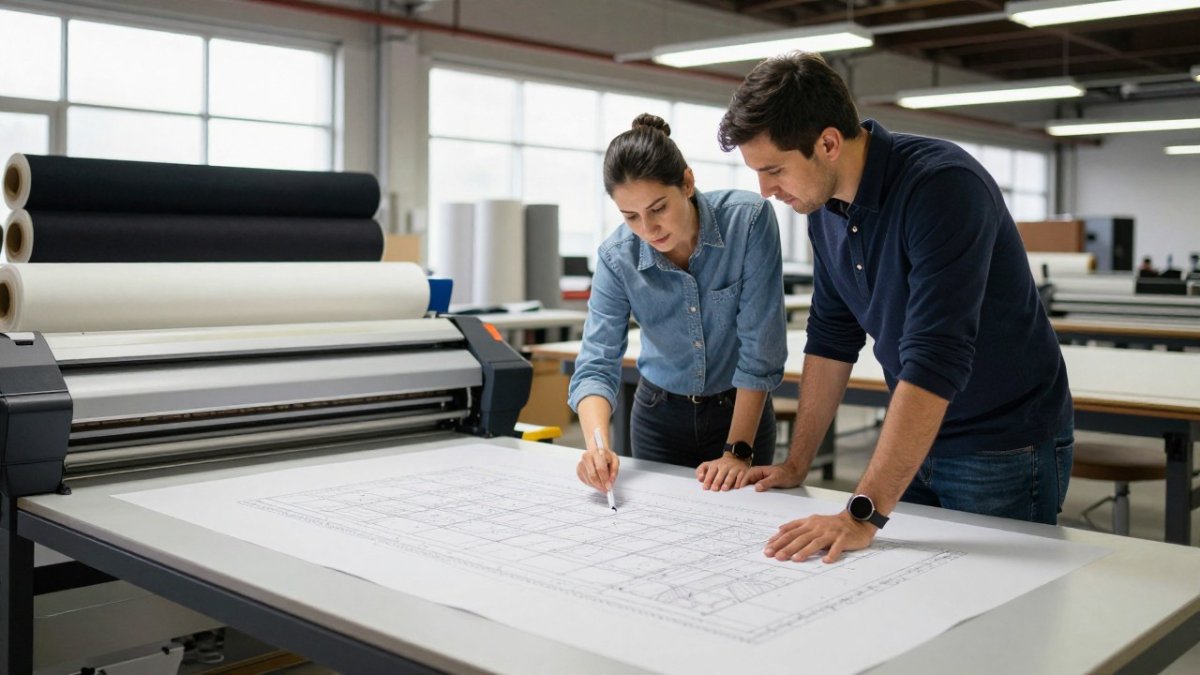
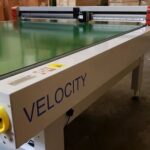
A wide-format plotter prints the full marker on paper so the cutting room works from an accurate, full-size reference.
Where a shop needs paper patterns cut and perforated as well as printed, the Pattern Plotter Cutter does that in the 49″ 1200 Futura and 64″ 1600 Futura models.
Automated Fabric Cutting for Automotive Interiors: What Changes
Automated fabric cutting for automotive interiors replaces hand cutting with a computerized machine that follows the nested file, which is where consistency and material yield improve at the same time.
The ProCut-X is a single-ply cutter with an automated conveyor, cutting fabric, leather, vinyl, foam, insulation, carbon fiber and fiberglass with interchangeable tools.
A cutter is only as good as the file it follows. Compare the alternatives to manual fabric cutting, or review the ProCut-X and ProCut XL machines before you commit.
Materials, Smart Surfaces and the Digital Cockpit
The remaining trends cluster around the cabin itself. WardsAuto’s 2026 interiors awards coverage identifies digital cockpits and connectivity as directions transforming interiors, and notes a return of buttons and knobs alongside more premium materials. That combination is where cabin design meets factory reality, and each trend lands on the floor differently.
Smart surfaces and embedded controls
Smart surfaces put sensors, backlighting, and capacitive or pressure-sensitive layers under or into the trim substrate. On the floor that means tighter cut tolerances, because a trim panel that must align with an embedded control has less room for variation than a plain panel, and the cutting file has to hold registration across the whole panel, not just at the edges.
Digital cockpits and connected cabin ecosystems
Digital cockpits and connectivity show up on the floor as new trim geometries to prototype and more variants per platform, multiplying the patterns and markers a shop manages. The response is to keep patterns in CAD so a new variant is a grading and nesting exercise rather than a redraw, and to plot full-size markers so the cutting room works from an accurate reference on every variant.
Premium materials and lightweight construction
Premium materials mean slower, more careful handling, and lightweight construction means unfamiliar material behavior. Both push work toward controlled cutting, because a computerized cutter follows the same nested file every time and does not vary with operator fatigue. Premium and lightweight materials often benefit from test cuts on your own stock before anyone commits. We offer free material test cuts and pattern digitizing samples.
Sustainable production, measured not estimated
Sustainability in manufacturing is a metrics problem before it is a messaging problem. The measurable levers are recycled content, scrap reduction, energy use per part, and end-of-life material recovery. Scrap reduction is the one a small shop controls most directly: tighter nesting, accurate markers, and consistent cutting reduce the meters consumed per part, visible in the material line rather than a sustainability report.
Quality, safety, and compliance implications
New interior technologies carry a validation burden that cabin-feature articles rarely mention. Smart surfaces and embedded electronics have to survive durability and wear testing, and ADAS-related interior redesigns change where trim, controls, and sightlines sit. Cut consistency and file traceability therefore matter more, not less: a pattern that exists only as paper is hard to audit, while a digitized pattern with a clean DXF or AAMA DXF export is not.
Where the software fits
Vetigraph handles pattern, grading, marker and nesting work. Easy-Plot converts DXF, DWG and PDF files to PLT/HPGL so a plotter can read them, since plotters read PLT/HPGL/HPG natively and need an optional conversion program for DXF and DWG at extra cost. For shops moving from paper to CAD, the V-Shoot Camera Digitizing System captures multiple pieces in one shot and exports DXF, AAMA DXF and PLT, the bridge between a pattern room full of card stock and a digital workflow that can handle variant proliferation.
Request a Quote and Test Your Own Materials
The honest way to evaluate any of this is on your own material.
We install onsite in the Los Angeles area and handle remote installation and training elsewhere. Financing through TimePayment is available. Pricing depends on the configuration, so request a quote rather than working from a list.
The trends above reward shops that can change a marker, a material or a pattern without stopping production.
Preguntas Frecuentes
Which automotive interior manufacturing trends matter most for small and mid-size factories in 2026?
The trends with the fastest payback for smaller shops are digital pattern digitizing, CAD nesting and automated fabric cutting for automotive interiors. Digitizing turns existing paper patterns into DXF or PLT files, nesting software reduces material waste on every marker, and a computerized cutter replaces manual cutting of leather, foam and technical fabrics. Together they shorten the pattern-to-production cycle without requiring a full factory rebuild. Larger shifts like digital cockpits and smart surfaces affect what you produce, but the workflow changes are what cut cost per piece.
How does digital pattern digitizing for automotive work with patterns we already have on paper?
A camera-based system such as V-Shoot captures multiple paper pattern pieces in one pass and vectorizes them automatically, exporting DXF, AAMA DXF or PLT files. Reference circles on the board correct for distance, angle and lighting, so no manual calibration is needed. Accuracy is within 0.039 inches on boards under 79 inches. The resulting files open in CAD software for grading and marker making, which means years of existing patterns stay usable instead of being redrawn.
What are the benefits of automated cutting systems in automotive interior production?
Automated cutting replaces hand-guided work with repeatable machine passes, so every piece matches the marker. Machines like ProCut-X and ProCut XL cut fabric, leather, foam and composites with interchangeable knives, and the conveyor versions keep a continuous flow going. Because the cutter reads the same CAD files used for nesting, the nested layout is what the machine cuts.
Do we need to replace our existing CAD files and plotters to adopt these trends?
Not necessarily. Velocity plotters read PLT and HPGL natively, and DXF or DWG files need an optional conversion program, such as Easy-Plot, at extra cost. The Pattern Plotter Cutter and Flatbed Plotter Cutter are compatible with Gerber AccuMark, Optitex, Audaces, Lectra and Vetigraph. If your team is still on paper, digitizing is the first step, then CAD and nesting, then automated cutting. Financing through TimePayment spreads the investment, and free material test cuts let you confirm performance before committing.


 ES
 EN_US