
Last Updated: October 30, 2026
Quick Summary
Pattern plotter pricing is driven by media width, throughput, duty cycle, software compatibility, and the add-ons your workflow demands, not by a single spec-sheet number. Because two factories buying the same model can need very different configurations, we quote every machine against the job it has to do.
- Wider units like Vector One (72″) and Vector Two (88″) generally cost more to build, ship, and support.
- Plotters read PLT, HPGL, and HPG natively; DXF or DWG files need Easy-Plot conversion at extra cost.
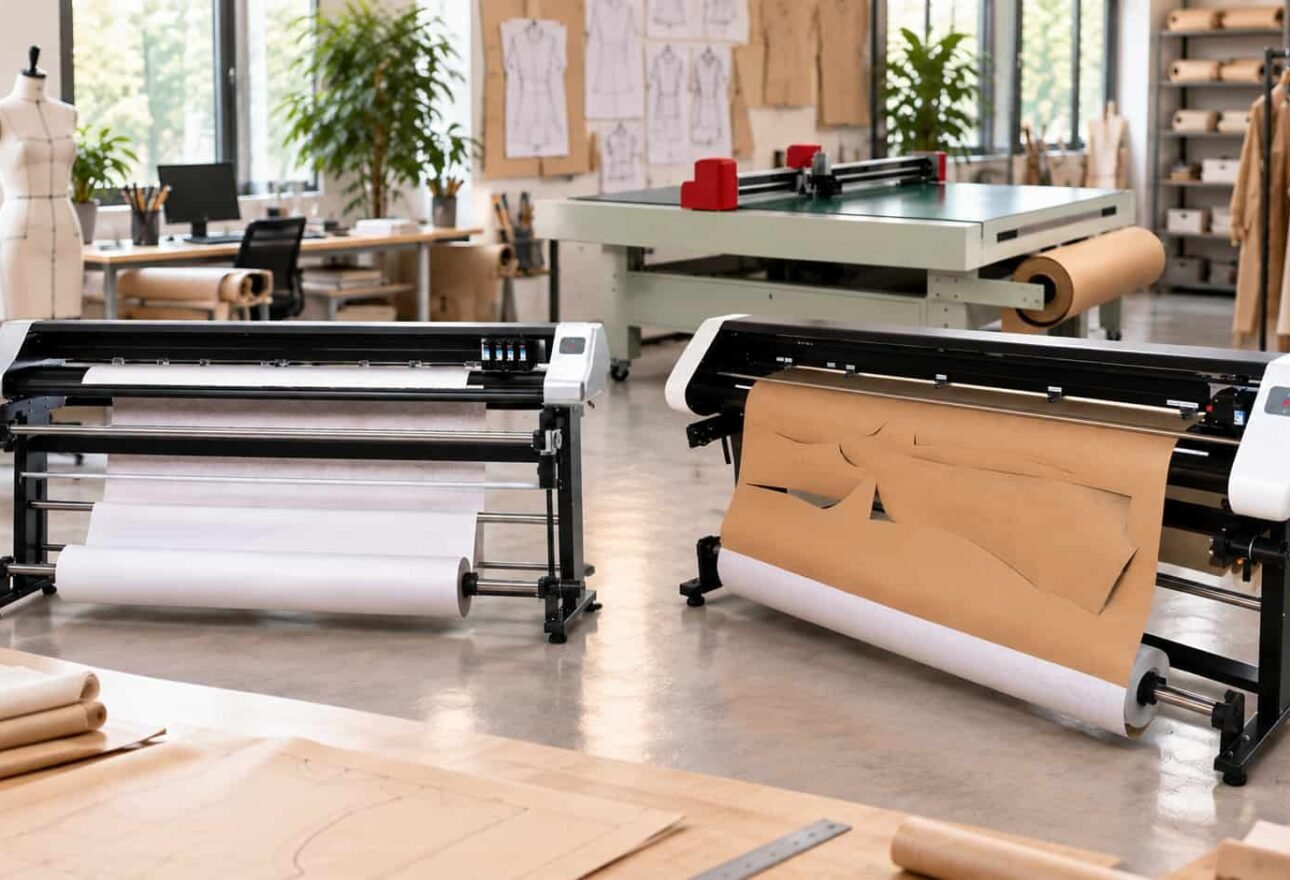
- All four plotter models print full-size patterns on paper and none of them cut material.
- Paper rolls and ink cartridges are ongoing costs that scale with your output, not the machine.
- Build a one-year ownership estimate covering consumables, software, installation, training, and downtime.
Table of Contents
- What Actually Drives Garment Pattern Plotter Pricing
- Apples-to-Apples: Comparing the Velocity Plotter Lineup
- Pattern Plotter File Formats and What They Cost You
- Pattern Plotter Versus Plotter Cutter: Two Different Budgets
- Where a Pattern Digitizing System Fits in the Budget
- Apparel CAD and Nesting Software: The Cost That Pays You Back
- Total Cost of Ownership Beyond the Purchase Price
- Request a Quote Matched to Your Production Volume
- Frequently Asked Questions
What Actually Drives Garment Pattern Plotter Pricing
Garment pattern plotter pricing is not set by a single number on a spec sheet. It reflects width, throughput, duty cycle, software compatibility, and the add-ons your workflow demands. At Velocity Plotters, we quote every machine against the job it has to do, because two factories buying the same model can need very different configurations.
The market itself is expanding. According to Future Market Insights’ pattern cutting plotter market forecast, the global pattern cutting plotter machine market is estimated at USD 2.36 billion in 2026 and projected to reach USD 3.40 billion by 2036. Rising demand does not make comparison easier, though. Most buyers still struggle to tell which line item actually moves the quote.
Below, we break down what separates a basic pattern plotter quote from a production-grade one, and how to compare models without getting lost in the paperwork.
Width, Speed, and Duty Cycle
Three physical factors do most of the work in any quote: how wide the machine plots, how fast it plots, and how hard you run it.
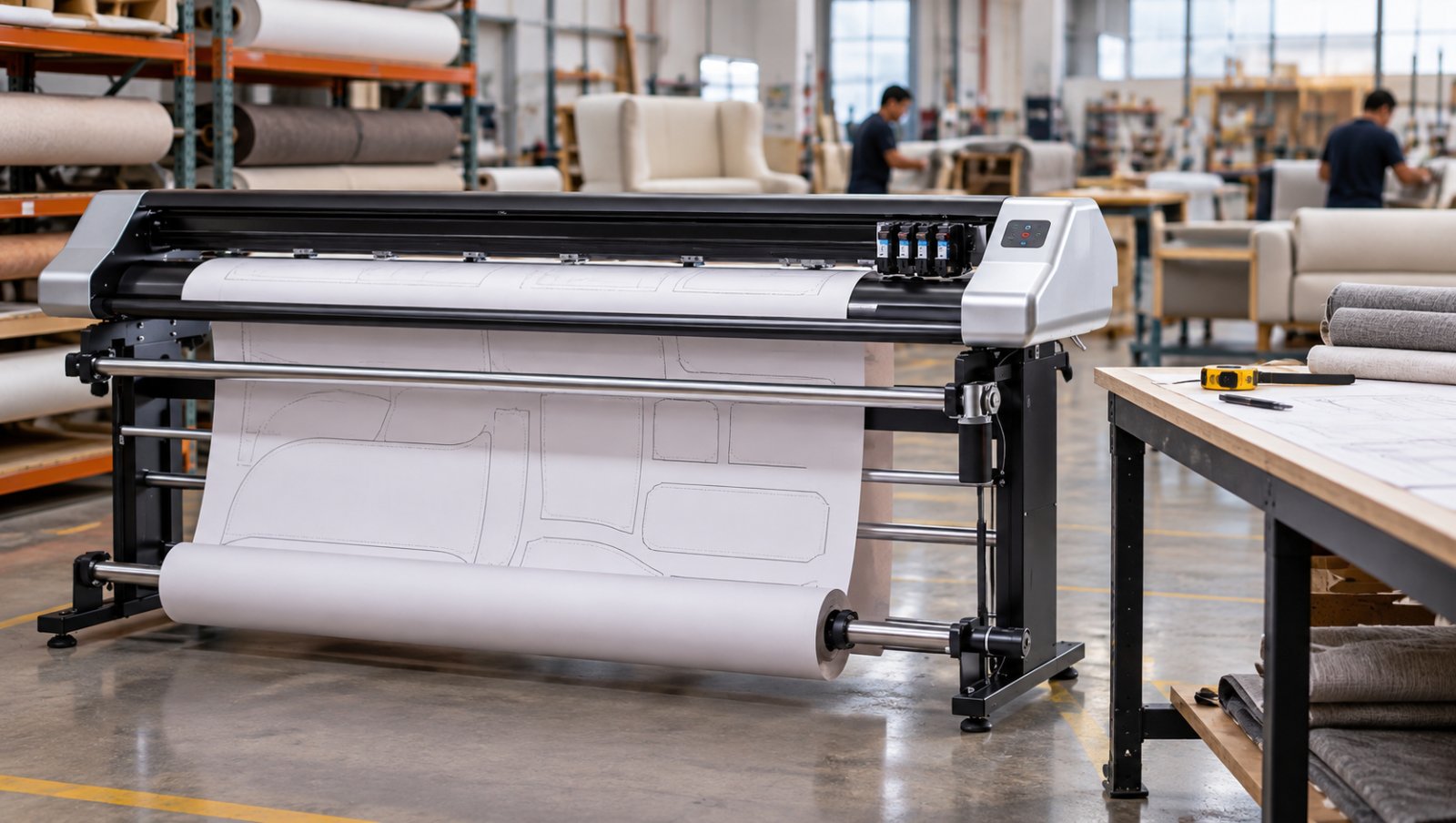
Media width sets your ceiling. Wider units such as the Vector One (72″) and Vector Two (88″) suit nested production markers, while narrower configurations fit smaller marker needs. Wider machines generally cost more to build, ship, and support, and that shows up in the quote.
Production capacity matters more than many buyers expect. A design room plotting a handful of patterns a day has different needs than a cutting room printing markers every shift.
Software, File Formats, and Add-Ons
Software is where quotes quietly diverge. Two buyers can request the same plotter and receive different totals because of what sits between their CAD system and the machine.
Plotters read PLT, HPGL, and HPG files natively. If your CAD system exports DXF or DWG, you need a conversion step, which is an optional program at extra cost. Easy-Plot handles DXF, DWG, and PDF conversion to PLT/HPGL.
Other line items to expect:
- Installation. Onsite installation in the Los Angeles area; remote installation and training elsewhere.
- Training. Remote training is available for teams adopting a digital workflow.
- Financing. Financing is available through TimePayment.
- Consumables. Paper rolls and ink cartridges are ongoing, not one-time.
Apples-to-Apples: Comparing the Velocity Plotter Lineup
Most plotter listings show a price and a width and leave the rest to guesswork.
|
Model |
Format / Width |
Duty Cycle |
Best For |
Cuts Material? |
|---|---|---|---|---|
|
Tecnica One |
Compact format, including a 49-inch configuration |
Light to moderate |
Design rooms, pattern departments, pre-production plotting |
No, paper printing only |
|
Vector One |
72″ |
Medium to high |
Shops printing markers most of the day |
No, paper printing only |
|
Vector Two |
88″ |
High, continuous |
Continuous industrial production, wide nested markers |
No, paper printing only |
|
Vector Four |
Ultra-high volume |
Maximum output |
High-output manufacturing floors |
No, paper printing only |
Every model above prints full-size patterns and markers on paper. None of them cut material. That distinction matters for budgeting, and we return to it in the plotter-versus-plotter-cutter section.
How to read the table. Start with the widest marker you actually run, then match duty cycle to how often the machine runs.
File handling is the same across the lineup. All four models read PLT, HPGL, and HPG natively. If your CAD system exports DXF or DWG, budget for the Easy-Plot conversion step regardless of which plotter you choose.
What the table deliberately leaves out. We do not publish list prices, because two buyers configuring the same model can need different setups. The Tecnica One is a compact pattern plotter for design rooms and pattern departments. Vector One and Vector Two are marker plotters with wider media, and Vector Four is built for ultra-high-volume manufacturing.

Pattern Plotter File Formats and What They Cost You
File format compatibility is the most common hidden cost in pattern plotter pricing. A machine that reads your files natively needs no extra software. One that does not adds a conversion layer to the budget.
PLT and HPGL are the native languages of most industrial plotters. If your CAD system outputs those, you plug in and plot.
That conversion is not free. Expect it as an optional program priced separately. Easy-Plot is our conversion tool for DXF, DWG, and PDF files, and it is worth pricing alongside the plotter so the total reflects your real workflow.
A common mistake is buying the plotter first and discovering the file gap later. Ask your CAD vendor what format they export, then confirm the plotter handles it natively or budget for conversion.
Pattern Plotter Versus Plotter Cutter: Two Different Budgets
A pattern plotter prints. A plotter cutter prints, cuts, and perforates paper patterns. That difference in function drives a difference in price, and buyers routinely confuse the two.
The pattern plotter versus plotter cutter decision comes down to what happens after the pattern is printed. If your cutting room still handles material manually or with a separate cutter, a plotter is the right purchase.
Our Pattern Plotter Cutter comes in 49-inch (1200 Futura) and 64-inch (1600 Futura) models. It handles paper only, not fabric or rigid materials, and it is compatible with Gerber AccuMark, Optitex, Audaces, Lectra, Vetigraph, and more. For shops that want paper patterns finished in one workflow, it removes a step.
Velocity Tecnica One Plotter →

Watch out: buying a plotter cutter expecting it to cut fabric. It cuts paper patterns. Production material cutting is a separate machine category.
Where a Pattern Digitizing System Fits in the Budget
A pattern digitizing system converts physical paper patterns into CAD-ready files. For factories still working from cardboard or paper originals, it is the entry point to a digital workflow, and it belongs in the budget alongside the plotter.
The V-Shoot Camera Digitizing System captures existing patterns and exports DXF, AAMA DXF, and PLT. That means the files land ready for grading, marker making, and plotting without a manual redraw.
Budgeting for digitizing is straightforward once you know your pattern library size. A shop with a few hundred active patterns has a different scope than one with thousands. We offer free pattern digitizing samples so you can see the output quality before committing. The V-Shoot camera digitizing system page covers the export formats and how to request a sample.
Apparel CAD and Nesting Software: The Cost That Pays You Back
Apparel CAD and nesting software is the line item buyers most often try to skip, and the one that most reliably pays for itself. Marker making and automatic nesting reduce fabric waste, and fabric is usually the largest recurring cost in a cutting room.
We sell and support Vetigraph, third-party CAD software for pattern design, grading, marker making, and nesting. Velocity does not own Vetigraph, but we install, train, and support it as part of the workflow. That matters when something breaks mid-production.
The math is simple to frame even without quoting numbers. A nesting improvement of a few percentage points across a season’s fabric spend typically outweighs the software cost. The VetiGraph CAD nesting and marker-making guide explains how material use improves and what the workflow looks like.
Total Cost of Ownership Beyond the Purchase Price
Total cost of ownership is where a careful buyer beats a fast one.
Consumables scale with output, not with the machine. Paper rolls and black ink cartridges are ongoing costs that scale with output.
Software is a one-time line item with a long tail. Conversion programs such as Easy-Plot are an additional line item to plan for alongside the machine.
Installation and training are setup costs, not recurring ones. Onsite installation is available in the Los Angeles area; remote installation and training are available elsewhere.
Downtime is the cost buyers underestimate. Support response time matters more than sticker price when a marker is due.
Financing changes the cash-flow picture, not the total. Financing is available through TimePayment. Compare the terms against paying outright, and treat any financing cost as part of the total.
Request a Quote Matched to Your Production Volume
Pattern plotter pricing only becomes meaningful when it is matched to your production volume, file formats, and material workflow. A design room and a continuous-production floor need different machines, and a quote built for one will mislead the other.
We quote each configuration against the job: width, software, conversion needs, installation, and training. Financing through TimePayment is available, and we offer free material test cuts and pattern digitizing samples so you can verify output before you buy.
Ready to price a machine against your actual workload? Request a quote matched to your production volume and we will walk through the configuration with you.
The hardest part of buying a pattern plotter is not choosing a model. It is knowing which configuration your workflow actually needs before you sign.
Frequently Asked Questions
How much does a garment pattern plotter cost?
There is no single list price, because pattern plotter pricing depends on the model, media width, speed, and whether you add file-conversion software. The practical approach is to define your widest marker, your daily paper volume, and your CAD file types, then request a quote built around that configuration. Velocity Plotters quotes each machine to the production profile rather than publishing a flat figure.
What is the difference between a pattern plotter and a plotter cutter?
A pattern plotter prints full-size patterns and markers on paper only. The Tecnica One and the Vector One, Two, and Four do not cut material. A plotter cutter adds a blade: the Pattern Plotter Cutter prints, cuts, and perforates paper patterns in one pass, while the Flatbed Plotter Cutter handles paper, cardboard, PVC, vinyl, canvas, and industrial textiles. So decide whether you need printed paper or finished cut parts before comparing quotes.
Which file formats do garment pattern plotters use?
Velocity plotters read PLT, HPGL, and HPG natively, which covers most marker-making output. DXF and DWG files need an optional conversion program such as Easy-Plot, which turns DXF, DWG, and PDF into PLT/HPGL. If your CAD system exports DXF by default, budget for that conversion step when you compare quotes, because it changes the total. Confirm your pattern plotter file formats with your CAD vendor before you order.
Can a pattern plotter cut fabric?
No. The Tecnica One and the Vector series print patterns and markers on paper and do not cut material. If you need fabric, leather, or foam cut automatically, that is a separate machine: the ProCut-X single-ply conveyor cutter or the ProCut XL large-format cutter. Many factories run both, plotting markers on paper for the cutting room and cutting production material on an automatic cutter. Pricing for the two is quoted separately.
Can I request a quote based on my production needs?
Yes, and that is the fastest way to get a real number. Tell Velocity Plotters your widest marker, how many meters of paper you plot per shift, which CAD software you run, and whether you also need digitizing or cutting. The team can arrange a free material test cut or a pattern digitizing sample so you see output before committing. Financing through TimePayment is available, and installation is onsite in the Los Angeles area with remote setup and training elsewhere.

 EN_US
 ES