
Last Updated: November 20, 2026
Resumen rápido
Automatic cutting systems can improve cutting consistency and repeatability, depending on the machine configuration, material and operating conditions.
- Pattern plotters print full-size markers on paper and do not cut material.
- The Pattern Plotter Cutter prints, cuts and perforates paper patterns only.
- The V-Shoot camera system exports DXF, AAMA DXF and PLT files.
- Digitize first, nest second, plot third, cut last.
- Onsite installation is available in the Los Angeles area, with remote training elsewhere.
Tabla de Contenidos
- Why Manual Fabric Cutting Hits a Ceiling
- Types of Cutting Machine in Garment Industry Production
- What an Automatic Fabric Cutting Machine Changes on the Floor
- CAD Pattern Making and Nesting Software: Where the Savings Start
- A Pattern Digitizing System Turns Paper Patterns Into Production Files
- Choosing Your First Step Away From Manual Cutting
- Preguntas Frecuentes
Why Manual Fabric Cutting Hits a Ceiling
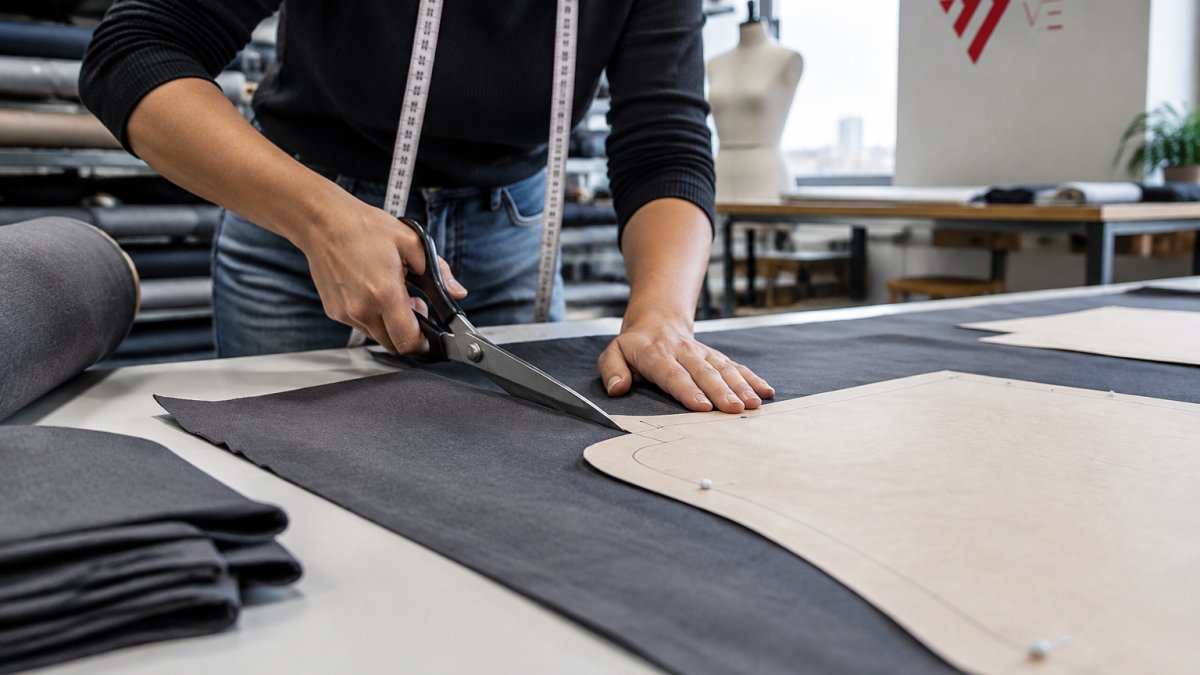
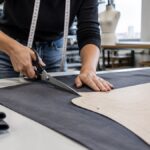
Manual fabric cutting is the practice of laying out, marking, and cutting fabric by hand at the cutting table, and it stops scaling the moment order volume rises. The global fabric cutting machine market is projected to grow from USD 3.9 billion in 2026 to USD 6.4 billion by 2033, according to Persistence Market Research’s fabric cutting machine market forecast, and that growth is driven by factories replacing hand methods with automated systems.
The cutting room is rarely slow because operators are slow. It is slow because every layer, every marker, and every re-cut runs through a pair of hands.
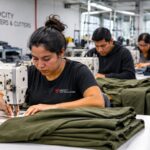
The ceiling shows up in three places. Accuracy drifts as layers stack up. Throughput caps out at what one table can physically handle. And skilled cutters become harder to hire and harder to replace.
Types of Cutting Machine in Garment Industry Production
The types of cutting machine in garment industry production fall into two families: machines that prepare patterns on paper, and machines that cut production material. Most factories need both, and confusing the two is the most common buying mistake we see.
Pattern-side equipment prints or plots full-size patterns and markers on paper.
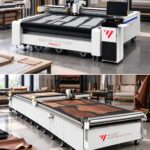
Material-side equipment cuts the actual fabric. The Flatbed Plotter Cutter plots, marks, and cuts paper, cardboard, PVC, plastic board, vinyl, canvas, and industrial textiles, useful when a shop runs mixed substrates and prototypes alongside production.
Matching the machine to the material and the run
The decision matrix below organizes the choice around the two variables that change the answer: the material, and whether the run is a one-off sample or a layered production cut.
|
Material / situation |
Manual bottleneck |
Practical alternative |
Why |
|---|---|---|---|
|
Paper patterns and markers, any fabric |
Hand-drawing and re-drawing markers |
Pattern plotter (Tecnica One, Vector series) |
Prints full-size markers from PLT/HPGL; no material contact |
|
Paper patterns that need to be cut or perforated |
Hand-cutting pattern card |
Pattern Plotter Cutter (Futura 49″ / 64″) |
Prints, cuts, perforates paper patterns only |
|
Wovens and stable knits, layered production |
Layer drift, inaccurate edges as the lay grows |
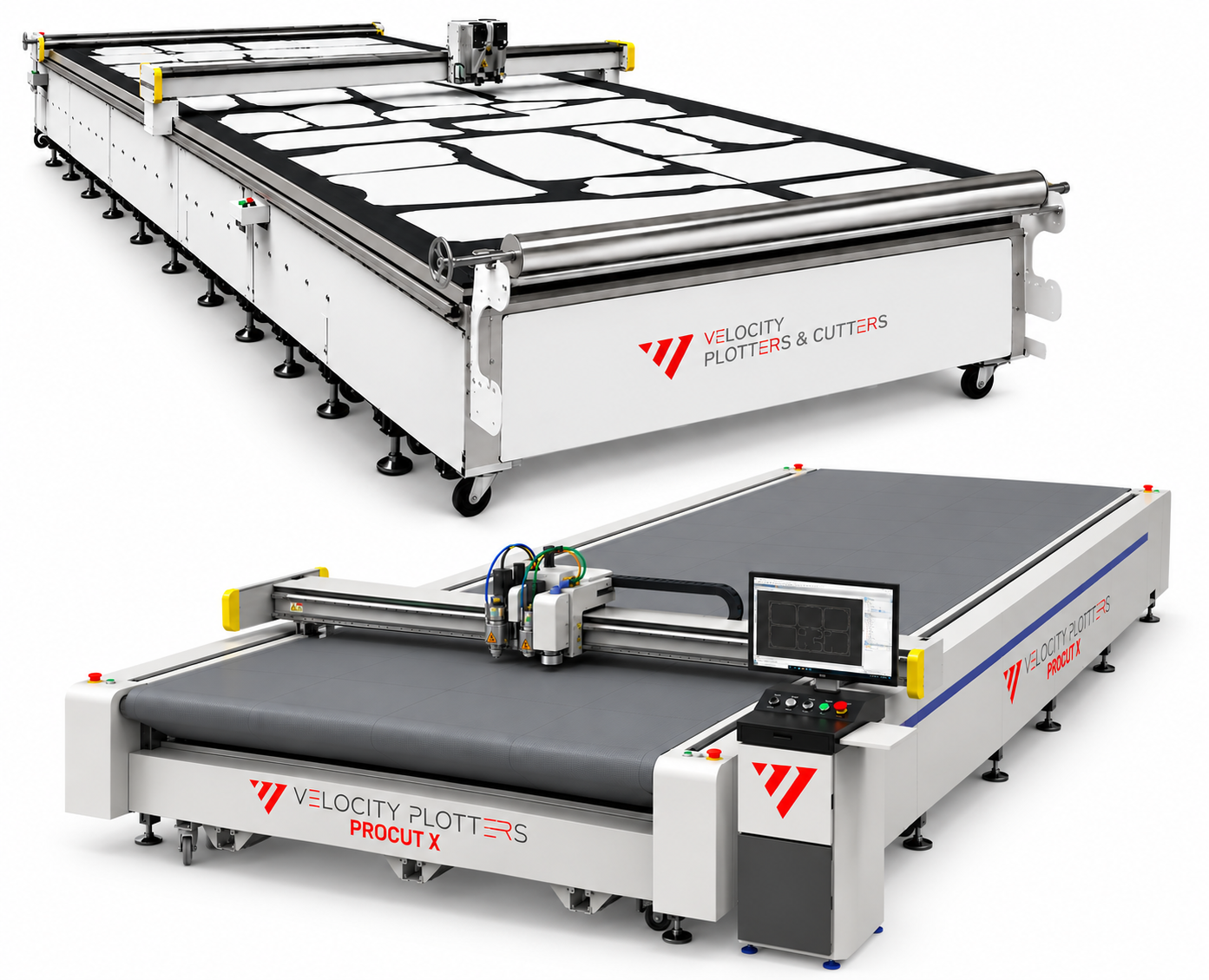
ProCut-X (single-ply, conveyor) |
Conveyor feed and interchangeable knives hold registration across the lay |
|
Long markers, oversized pieces, continuous runs |
Table length limits marker size |
ProCut XL (large format, static and conveyor) |
Large-format bed with independent vacuum hold-down zones |
|
Leather, foam, technical materials |
Skiving inconsistency, hand fatigue |
ProCut-X / ProCut XL |
Oscillating, pneumatic, and rotary knife options for different substrates |
|
Mixed materials, prototyping, signage-weight stock |
Switching tools between jobs |
Flatbed Plotter Cutter |
Plots, marks, and cuts paper, cardboard, PVC, plastic board, vinyl, canvas, industrial textiles |
|
Delicate or slippery material |
Shifting and distortion under hand pressure |
Automatic cutter with vacuum hold-down |
Material stays flat and registered during the cut |
One-off versus production runs
For one-off samples and small batches, the constraint is usually file preparation, not cutting speed. A plotter plus a digitizing system gets a paper pattern into CAD and back out as a clean marker faster than re-drawing it by hand, and the Flatbed Plotter Cutter handles mixed-material prototype work that does not justify a full production cutter.
For a side-by-side view of which machine type fits which production profile, see our comparison of industrial fabric cutting machines.
|
Machine type |
What it works on |
Lo mejor para |
Cuts material? |
|---|---|---|---|
|
Pattern plotter (Tecnica One, Vector) |
Papel |
Printing patterns and markers |
No |
|
Pattern Plotter Cutter (Futura) |
Paper only |
Print, cut, perforate patterns |
Paper only |
|
Flatbed Plotter Cutter |
Paper, cardboard, vinyl, canvas, industrial textiles |
Mixed-material shops, prototyping |
Yes |
|
ProCut-X / ProCut XL |
Fabric, leather, foam, composites |
Volume production cutting |
Yes |
What an Automatic Fabric Cutting Machine Changes on the Floor
An automatic fabric cutting machine changes three things at once: accuracy, throughput, and who does the work. Automated cutting systems achieve dimensional accuracy of ±0.5 mm, according to BSEW’s comparison of manual and automated cutting precision, a repeatability that hand cutting cannot match across a full lay.
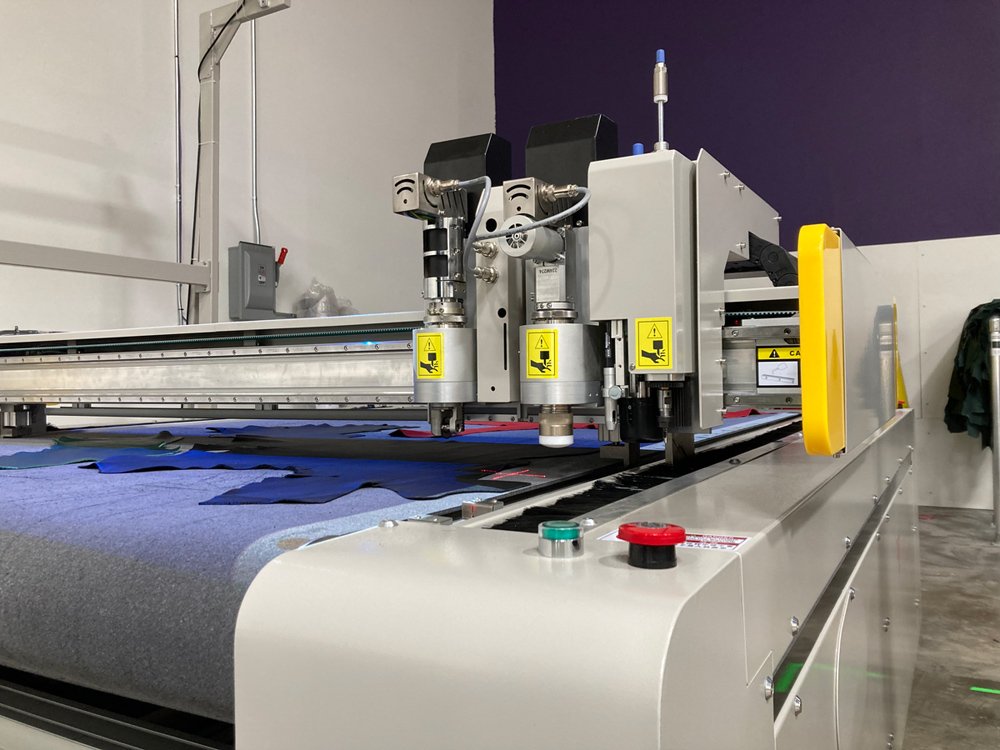
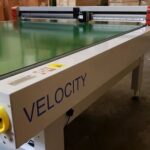
The ProCut-X handles single-ply work with an automated closed-loop conveyor and interchangeable oscillating, pneumatic, and rotary knives for fabric, leather, foam, and technical materials.
What changes for the operator
The ergonomic shift is the part most buying guides skip. Manual cutting can concentrate strain in the hands, wrists, and shoulders. An automatic cutter moves the operator from pushing a blade through layers to loading the lay, confirming the file, and monitoring the cut, fewer people need blade-handling skill, and more need file and marker literacy.
Cut quality and material effects
Automation does not make every material behave the same way. Blade choice matters: oscillating knives suit denser wovens and technical materials, rotary knives suit lighter stacks, and pneumatic knives handle thicker or more compressible substrates. Vacuum hold-down reduces the layer shift that causes mismatched pieces in a tall lay. Fraying and edge condition still depend on the material and blade, so a free material test cut on your own fabric is the only reliable way to confirm the result.
Setup, space, and operating requirements
An automatic cutter is a floor-plan decision, not just a purchase. Conveyor versions need clearance at both ends for material flow, the static large-format bed needs a footprint matching your longest marker, and the vacuum system needs a clean, stable supply. We install onsite in the Los Angeles area and handle remote installation and training elsewhere, and financing is available through TimePayment.
Total cost of ownership
Evaluate an automatic cutter on total cost of ownership, not sticker comparison. The line items that matter are the machine, blade and consumable wear, vacuum and power draw, floor space, operator training, and the file-preparation workflow that feeds it. The savings side is material yield from better nesting, labor redeployed from cutting to inspection and finishing, and fewer re-cuts from layer drift.
You can see the full specification on the ProCut XL large format cutting machine page.
CAD Pattern Making and Nesting Software: Where the Savings Start
CAD pattern making and nesting software is where material savings actually begin, because nesting decides how much fabric the marker consumes before a blade ever touches it.
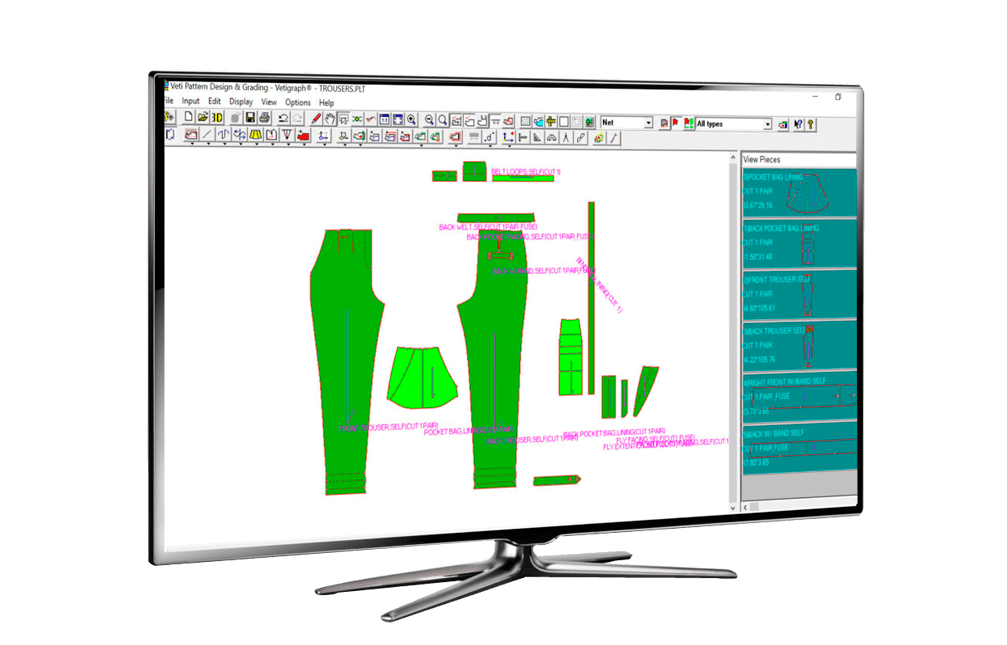
Vetigraph, which Velocity sells and supports, covers pattern creation, grading, and marker making, with intelligent nesting, piece rotation and flipping, and matching for striped, plaid, and printed fabrics with distortion compensation.
The honest limitation: software savings depend on how disciplined your pattern library is. Messy patterns nest badly no matter what engine you run.
To see the software itself, visit the Diseño y nesting CAD de Vetigraph page.
A Pattern Digitizing System Turns Paper Patterns Into Production Files
A pattern digitizing system converts physical paper patterns into digital files that CAD, grading, and marker making can use, the step most manual shops skip, and the one that unlocks everything downstream.
The V-Shoot Camera Digitizing System is a camera-based table that exports DXF, AAMA DXF, and PLT, so existing paper patterns move into CAD without redrawing them. Free pattern digitizing samples are available so you can test output quality on your own patterns before committing.
The order of operations matters: digitize first, nest second, plot third, cut last.
Choosing Your First Step Away From Manual Cutting
Choosing your first step comes down to where your bottleneck actually sits. If patterns live on paper, start with digitizing. If markers are hand-drawn, start with CAD and nesting.
A phased roadmap beats a big-bang purchase. Our guide to modernizing manual apparel cutting workflows lays out that sequence, and our article on integrating flatbed plotter cutters into production covers the mixed-material case.
Onsite installation is available in the Los Angeles area, with remote installation and training elsewhere.
The cutting room does not have to stay the slowest part of your factory.
Preguntas Frecuentes
How does automatic fabric cutting work?
A digital marker file drives a cutting head over a table that holds the material in place. On the ProCut-X and ProCut XL, interchangeable oscillating, pneumatic and rotary knives handle fabric, leather, foam and composites, and an automated closed-loop conveyor moves material through for continuous cutting. Automated cutting supports consistent repeat orders across operators.
¿Puede un plotter de patrones cortar tela?
No. Pattern plotters such as the Tecnica One and Vector series print full-size patterns and markers on paper only. The Pattern Plotter Cutter (1200 Futura 49″ and 1600 Futura 64″) prints, cuts and perforates paper patterns, still paper only. Cutting actual fabric, leather or foam requires an automatic cutting machine like the ProCut-X or ProCut XL, or the Flatbed Plotter Cutter for materials such as canvas, vinyl and industrial textiles.
What should manufacturers consider when choosing a fabric cutting system?
Start with your material mix, then match the machine to it. Leather, foam and technical textiles need different tooling than cotton or canvas. Check the largest pattern piece against the cutting area, confirm the software reads your existing files (PLT/HPGL natively, DXF/DWG through Easy-Plot conversion), and ask about training and support. Request a free material test cut so you see edge quality on your own fabric before committing.
How can CAD pattern making and nesting software improve fabric cutting?
Nesting software arranges pattern pieces on the marker to use more of each roll. Vetigraph handles pattern design, grading and marker making, with intelligent nesting, piece rotation and flipping to improve material utilization, plus matching for striped, plaid and printed fabrics. Better markers mean less waste per cut, and the same file feeds the plotter and the cutter, so what you nest is what you produce.
How can a factory test whether a cutting system works with its materials?
Send the materials you actually run and ask for a free material test cut. A test shows how the blade handles your fabric weight, whether edges fray or distort, and how fast the machine completes a real marker. For paper patterns, request a pattern digitizing sample through the V-Shoot system. Both let you judge output before you commit to installation, training and financing through TimePayment.

 ES
 EN_US